Warehouse Operations Simplified

Inventory Management

Knowledge Series

Inventory Allocation Demystified

Accurate and timely Inventory allocation plays a pivotal role in ensuring operational efficiency, customer satisfaction, and overall success. This knowledge series delves into the complexities of inventory allocation, with a specific focus on the delicate balance between soft and hard confirmations. Moreover, we explore the additional layer of managing expected inventory from open purchase orders, highlighting its significance in enhancing clarity and customer satisfaction Decoding Inventory Allocation Understanding Inventory Allocation Inventory allocation involves the strategic assignment of available stock to fulfill customer orders, preventing overselling and ensuring timely order fulfillment. Soft Allocation vs Hard Confirmation Challenges Introduced by Soft Confirmed Orders Certain scenarios involve orders receiving soft confirmations before obtaining hard confirmations. This phase may result from pending payment verification, product availability checks, or the need for manual review. During this soft confirmation stage, it is crucial to reserve inventory effectively, especially when considering expected inventory from open purchase orders. The Significance of Soft Allocation in Anticipation of Open Purchase Orders Preventing Overcommitment: Soft allocation safeguards against overselling, ensuring that inventory isn’t promised to multiple customers simultaneously. Enhancing Customer Experience: The timely reservation of inventory through soft allocation contributes to a positive customer experience, offering transparency and accurate expectations. Optimizing Expected Inventory: Anticipating open purchase orders as expected inventory, soft allocation optimizes the utilization of stock that has not yet reached the warehouse. Maximizing Profitability Through Efficient Inventory Control Find out how effective inventory control changes companies by maximizing income through cost savings, improving customer satisfaction, and simplifying supply chains. Read the blog today! Learn More Strategies for Seamless Soft Allocation and Expected Inventory Management Dynamic Allocation Rules: Implement automated rules governing soft allocation based on various criteria, such as order priority, payment verification, and product availability. Real-Time Visibility: Utilize advanced inventory management systems to provide real-time visibility into soft allocations and expected inventory, facilitating accurate decision-making. Proactive Communication: Establish clear communication channels between relevant teams to provide timely updates on soft allocations, expected inventory status, and order progression. Continuous Monitoring: Regularly reassess soft allocations and expected inventory based on changes in order status, payment verification, or other relevant factors. Pitfalls and Challenges in Managing Soft Allocation and Expected Inventory Risk of Overcommitment: Without careful monitoring, there’s a risk of overcommitting inventory through soft allocations, potentially leading to fulfillment challenges. Manual Errors: Manual processes for soft allocation may introduce errors, emphasizing the need for automated solutions and technology. Coordination with Suppliers: Collaborate closely with suppliers to align expected inventory from open purchase orders with soft allocations, ensuring synchronization in the supply chain. Conclusion Balancing soft allocation, hard confirmation, and the management of expected inventory from open purchase orders requires a harmonious integration of technology, automated processes, and proactive communication. Leveraging advanced inventory management systems, implementing dynamic allocation rules, and fostering collaboration between stakeholders create an environment conducive to operational excellence. Soft allocation, when extended to include expected inventory, becomes a strategic asset, optimizing order fulfillment, enhancing customer satisfaction, and fortifying supply chain resilience in the dynamic landscape of modern commerce.
Barcode Scanning - An Overview
Knowledge Series

Barcode Scanning – An Overview

An efficient warehouse needs a well-organized inventory management system that uses barcode scanning systems. Customers expect warehouse operations to be more efficient and effective to provide competitive pricing and reduce errors, that can be enabled using warehouse barcode systems. Manual inventory management cannot meet these customer needs. It is impossible to survive in a fast-paced environment without a system where data flows with accuracy and speed by using a barcode scanner in warehouse. Warehouse barcode system allows us to allocate resources efficiently, get the most out of our resources, and boost worker productivity all at once. It also gives everyone the ability to adapt to external events that are outside our control. History The concept of the barcode scanning system  — an alphabet made up of thick and thin bars — came into being in 1951 but wasn’t commercially successful until the 70s. It took another quarter of a century for one to be printed on product Packaging Material In A Warehouse and scanned. The right barcode scanning warehouse can help in streamlining the supply chain and use data to improve operational efficiency because connected supply chains with physical and digital elements working together prove to be much more efficient in adapting to changing conditions and needs. Since it came into widespread use, the warehouse barcode scanner has become a standard tool in warehouse and retail management, helping businesses keep track of inventory, determine when to restock and intelligently manage overall operations. Today there are hundreds of different types of barcodes, each with unique strengths and limitations. Once used for simple code reading, barcodes scanning warehouses have now become a way to marry the storage and movement of goods with the global information infrastructure. A barcode scanning warehouse consists of both hardware and software. The software, which is part of the warehouse management system (WMS), can help you control inventory, pick and pack orders, and ship products. When you scan a product’s barcode, the warehouse barcode software updates your inventory and ensures that your employees are picking the correct product for the order. What are Barcodes? How do they work? What information can a barcode include? There are generally four different types of character sets: Types of Barcodes 1D Barcodes 2D Barcodes 1D vs 2D Barcodes – Pros & Cons 1D Barcode Pros 2D Barcode Pros Cons Cons Merits of Barcode Scanning Manufacturers and distributors can expedite the fulfilment process using barcode scanning. A single barcode provides instant access to a large amount of data, including how a box should be packed or where on the warehouse floor it should be routed. The same barcode connects workers and truck drivers to manage paperwork, track when and where, and manage inventory more efficiently. Redundant information and error corrections can be made in real time even if a package suffers damage or a label is destroyed. With granular visibility into the supply chain, there is more transparency to meet regulatory requirements. Tracing products becomes more efficient and possible using barcode scanning technology. Through inventory location, one can see what products were stored at which place. Barcode scanning tracks the employee number/date/time stamp for every transaction, including sales, returns, adjustments, and transfers. The two technologies lock down accuracy to 99.9% or higher. Warehouses, which do not use barcodes for scanning and data capture, are very manual and require office personnel or warehouse employees to key all warehouse activity documents, such as receipts, inventory transfers between locations, cycle and physical counts, and returns. Wireless scanners connected to the WMS allow data capture where the inventory is — on receiving docks, on pallet racks, in receiving, and in shipping.

Quality Control In Warehouse
Knowledge Series

Quality Control In Warehouse

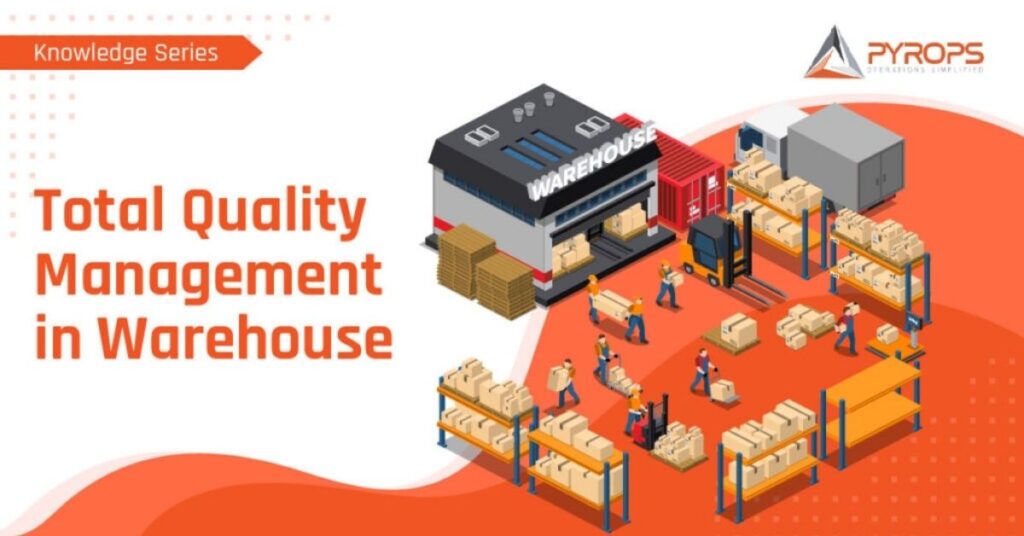
Quality control in warehouses is important to the success of an organization and its business. Focusing on the quality of each order, monitoring and adjusting protocols and processes based on key metrics for the proper packing and shipping of each order can improve the efficiency of operations. Keeping tabs on metrics such as how long it takes to pick, safely package, and correctly fill an order, to then load it properly before it ships out are all fundamental to improving product quality. What Is Quality Control In A Warehouse? In the dynamic world of warehouse operations, a warehouse quality checker plays a pivotal role in maintaining efficiency, minimizing errors, and safeguarding customer satisfaction. Warehouse quality control encompasses a comprehensive set of practices aimed at monitoring and evaluating the quality of warehouse operations and ensuring that all work adheres to established standards. Effective QC in warehouses extends beyond the confines of the warehouse walls, encompassing the entire process of receiving and dispatching goods. This includes meticulously inspecting incoming shipments to ensure that products meet the specified quality standards before they are stored or distributed. This level of vigilance helps protect your reputation and ensures that your customers, or your customers’ consumers if you are a third-party logistics (3PL) warehouse, receive only the highest quality goods. Quality control in warehouse management extends far beyond mere product inspection; it encompasses a holistic approach to optimizing warehouse operations and minimizing inefficiencies. By implementing rigorous quality control measures, businesses can identify and address potential bottlenecks, streamline processes, and reduce the likelihood of errors. This, in turn, leads to improved efficiency, reduced costs, and enhanced customer satisfaction. Importance of Quality Control In warehouse Quality in the warehouse operations is of paramount importance for ensuring that products are stored, handled, and shipped in a manner that maintains their quality and integrity. It plays a crucial role in safeguarding customer satisfaction, minimizing errors and losses, and optimizing warehouse operations. Enhancing Customer Satisfaction Effective quality control in warehouse management measures directly contributes to customer satisfaction by ensuring that products reach customers in a timely, undamaged, and defect-free condition. This, in turn, fosters customer loyalty, reduces the likelihood of returns and complaints, and enhances the overall perception of the brand. Minimizing Errors and Losses QC in the warehouse helps prevent costly errors and losses that can arise from damaged goods, incorrect shipments, or mishandling of products. By implementing rigorous quality control procedures, businesses can identify and address potential issues early on, reducing the risk of financial losses and reputational damage. Optimizing Warehouse Operations Warehouse quality management promotes efficiency and consistency within warehouse operations. By establishing clear quality standards and implementing effective control measures, businesses can streamline processes, reduce rework, and minimize downtime. This, in turn, leads to cost savings, improved productivity, and enhanced overall warehouse performance. Keeping tabs on metrics such as how long it takes to pick, safely package, and correctly fill an order, to then load it properly before it ships out are all fundamental to improving product quality. Total Quality Management (TQM) Total Quality Management (TQM) is a manufacturing philosophy, which focuses on improving quality across the operations, and producing higher quality products with few defects. Total quality management is a structured approach to overall organizational management. The focus of the process is to improve the quality of an organization’s outputs, including goods and services, through the continual improvement of internal practices.  Total warehouse quality assurance extends beyond mere product inspection; it permeates every stage of the warehouse process. It involves establishing clear quality standards, implementing rigorous quality control measures, and empowering employees to take ownership of quality improvement initiatives. This comprehensive approach ensures that quality remains at the forefront of warehouse operations, minimizing errors, reducing costs, and ultimately enhancing customer satisfaction. The standards set as part of the TQM approach can reflect both internal priorities and any industry standards currently in place. Industry standards are defined at multiple levels and may include adherence to various laws and regulations governing the operation of a particular business. Industry standards can also include the production of items to an understood norm, even if the norm is not backed by official regulations. Principles of TQM Customer Focus Leadership Employee involvement Process-centric approach Strategic and systematic approach Continous improvement Data centric approach Mutually beneficial supplier relations How to improve Quality in a Warehouse? Supply chains are networks that require fast and clear communication about accurate information on supply and demand. Implementing effective quality control (QC) in warehouse management can save the facility money by identifying and reducing wasted orders, time, energy, and materials. Here are ways to improve quality in warehouse operations which will make operations more competitive and favorable to stakeholders involved. Inspect individual orders Invest in streamlining technology Track daily progress Make quality control a high priority Tighten up quality controls Tools to control Quality check process in warehouse Warehouse quality checker benefits a warehouse in that it should successfully catch issues early on and limit any future mistakes. This can help tighten up inefficient processes or aid in diagnosing a specific problem and improve warehouse efficiency. Seven warehouse quality checker tools that help organizations troubleshoot errors are illustrated below Cause & Effect Daigram Check Sheet Flow Chart Histogram Pareto Chart Scatter Diagram 5S in warehouse The 5S is a lean strategy that helps to achieve warehouse objective i.e. to solve the problems. Getting a warehouse that is clean, organized, and much more than looking fantastic. It is all about making warehousing operations most effective; excel in training and communications, and eventually saving money and time. A facility that has introduced 5S can rapidly detect or surface problems or address the causes and fix the brief-term challenges to avoid recurrence. Let us look the 5S steps for implementing 5S in the Warehouse. Sort- Seiri Set in Order- Seiton Shine- Seiso Standardize- Seike Sustain- Shitsuke Elevate Warehouse Quality Assurance Pyrops WMS is committed to providing comprehensive warehouse management solutions (WMS) tailored to your specific quality control needs. Our team of experienced

Knowledge Series

Comingling Inventory Holding

The concept of commingling inventory in multi-tenant warehousing has gained traction as a cost-effective and efficient solution for third-party logistics (3PL) providers. Commingling, or mixing, inventory from different clients within the same storage space, allows for better space utilization and operational flexibility. However, while this approach offers significant advantages, it also presents several challenges and regulatory hurdles, particularly in regions like India. Understanding Commingling of Inventory Commingling inventory involves storing products from multiple clients together in the same warehouse location, as opposed to segregating each client’s inventory into distinct, designated areas. This method can reduce storage costs, enhance space utilization, and streamline warehouse operations, making it an attractive option for 3PL companies managing large and diverse inventories. Challenges Faced by 3PL Companies Despite its advantages, adopting a commingled inventory model is not without its challenges. 3PL companies must navigate several operational and strategic hurdles to successfully implement this approach. Healthcare and Pharmaceuticals: One of the primary concerns with commingled inventory is maintaining accurate records. Ensuring that each item is correctly attributed to its respective client is crucial. Advanced Warehouse Management Systems (WMS) with robust barcode scanning and RFID technology are essential to avoid errors in inventory tracking. Product Compatibility and Safety: Not all products can be safely stored together. Perishable goods, hazardous materials, and items with specific storage requirements (like temperature control) must be carefully managed to prevent cross-contamination and ensure compliance with safety standards. Client Trust and Transparency: Clients may be wary of commingling due to fears of inventory loss, damage, or misallocation. Building and maintaining trust through transparent processes, regular audits, and clear communication is vital. Ensuring clients that their products are managed with the utmost care and accuracy is essential for gaining and retaining their business. Complexity in Order Fulfillment: Commingled inventory can complicate the order fulfillment process. Picking, packing, and shipping items from different clients within the same space require meticulous attention to detail and efficient processes to avoid errors and delays. Complexity in Order Fulfillment: Commingled inventory can complicate the order fulfillment process. Picking, packing, and shipping items from different clients within the same space require meticulous attention to detail and efficient processes to avoid errors and delays. Customization and Client-Specific Requirements: Different clients may have unique handling and storage requirements. Meeting these needs within a commingled environment can be challenging, necessitating flexible WMS capabilities and adaptable operational procedures. Availability of space when needed: While commingled inventory holding in multi-client warehousing optimizes space, it puts a high onus on space planning per client. If planning is poor, it may result in space being unavailable for a particular client the day its needed to manage a temporary peak. Regulatory Constraints in India In addition to operational challenges, 3PL companies in India must also contend with various regulatory constraints that impact the adoption of commingled warehousing. Goods and Services Tax (GST) Compliance: Under India’s GST regime, maintaining accurate records of inventory for tax purposes is crucial. Commingling inventory can complicate the segregation of taxable items, potentially leading to compliance issues and penalties. Food Safety and Standards Authority of India (FSSAI) Regulations: For 3PL providers handling food products, adhering to FSSAI guidelines is mandatory. These regulations often require strict segregation of different food categories to prevent cross-contamination, making commingling a challenging proposition. Legal Liability and Accountability: In India, 3PL companies must ensure that their warehousing practices comply with legal requirements regarding accountability and liability for lost or damaged goods. Clear contractual agreements and robust insurance coverage are essential to mitigate risks associated with commingled inventory. Customs and Excise Regulations: For companies dealing with imported goods, customs and excise regulations require precise tracking and documentation of inventory. Commingling can complicate the adherence to these regulations, potentially leading to delays and fines. Picking Mistakes to Avoid in Warehouse Management System Avoid common pitfalls to simplify operations and develop your warehouse management system. Read our blog today! Learn More Conclusion While commingling inventory in multi-tenant warehousing offers numerous benefits for 3PL companies, it also presents significant challenges and regulatory constraints. Accurate inventory tracking, client trust, product compatibility, and regulatory compliance are critical factors that must be addressed to successfully implement this model. In India, navigating the complexities of GST compliance, FSSAI regulations, and customs requirements further complicates the adoption of commingled warehousing. For 3PL companies considering this approach, investing in advanced WMS technology, establishing clear and transparent processes, and ensuring robust contractual agreements are essential steps toward overcoming these challenges. By carefully balancing the advantages of commingled inventory with the necessary operational and regulatory safeguards, 3PL providers can enhance their efficiency and competitiveness in the evolving supply chain landscape.

Knowledge Series

Understanding Different Inventory Types in Warehousing

In modern warehousing, inventory isn’t just about boxes on racks — it’s about the type of inventory and the specific controls needed to manage each efficiently. Each inventory type comes with its own set of handling, tracking, and compliance requirements. Here’s a quick breakdown of the most common types and how they are typically managed: 1. Regular Inventory What it is:Standard inventory with no special controls — commonly used in general merchandise, retail, or industrial supplies.Handling Peculiarities: 2. Batch-Controlled Inventory What it is:Inventory tied to specific batches or lots produced or received together. Common in pharma, food, and chemicals.Handling Peculiarities: 3. Expiry-Controlled Inventory What it is:Inventory with a defined expiration date, beyond which it becomes unsellable or unsafe. Handling Peculiarities: 4. Serial-Controlled Inventory What it is:Each item is uniquely identified by a serial number. Tracking happens at the individual unit level. Handling Peculiarities: 5. Condition-Controlled Inventory What it is:Inventory stored or handled under specific environmental conditions like temperature, humidity, etc. Handling Peculiarities: 6. Returns & Reverse Inventory What it is:Returned or rejected inventory awaiting inspection, refurbishment, restocking, or disposal. Handling Peculiarities: 7. Quality Hold / Quarantine Inventory What it is:Inventory under inspection or pending approval before it’s made available for sale or production. Handling Peculiarities: 7. Quality Hold / Quarantine Inventory What it is:Inventory under inspection or pending approval before it’s made available for sale or production. Handling Peculiarities: Inventory Allocation / Reservations Covers inventory that is: Picking Mistakes to Avoid in Warehouse Management System Avoid common pitfalls to simplify operations and develop your warehouse management system. Read our blog today! Learn More Conclusion Understanding the nuances of different inventory types is critical for optimizing warehouse operations, ensuring regulatory compliance, and enhancing overall supply chain efficiency. Whether managing batch-controlled pharmaceuticals, serial-tracked electronics, or condition-sensitive perishables, each type requires tailored handling and system capabilities. By aligning inventory strategies with the specific characteristics of each category, businesses can achieve greater accuracy, traceability, and responsiveness — all essential for staying competitive in today’s fast-paced market.

Knowledge Series

Negative Inventory in Warehousing Systems

Effective inventory management is crucial for any warehouse, ensuring adequate stocks of raw materials, accessories, equipment, and finished products. However, improper inventory management can lead to negative inventory, a condition where inventory levels drop below zero, causing significant issues for warehousing operations. What is Negative Inventory? Negative inventory means that your inventory records show less than zero stock for an item. While it is impossible to physically have less than zero of an item, negative inventory appears in your system due to errors or poor inventory management practices. This issue can disrupt operations, delay deliveries, and lead to dissatisfied customers. Causes of Negative Inventory Impacts of Negative Inventory Negative inventory can severely impact warehouse operations: Preventing Negative Inventory Proactive measures are essential to prevent negative inventory: Picking Mistakes to Avoid in Warehouse Management System Avoid common pitfalls to simplify operations and develop your warehouse management system. Read our blog today! Learn More Conclusion Managing negative inventory effectively is crucial for maintaining smooth warehouse operations and ensuring customer satisfaction. Implementing robust WMS systems, identifying and addressing problem areas, and conducting regular audits can help prevent negative inventory. By taking proactive measures, warehouses can maintain accurate inventory records, reduce costs, and enhance overall efficiency. Ready to improve your inventory management? Schedule a demo with our WMS solution to see how it can help you avoid negative inventory and boost your operational efficiency.

Blogs

Invisible Inventory Loss: The Hidden Gaps in Your Warehouse Operations

Invisible Inventory Loss Introduction When inventory doesn’t match system records, the first assumption is often theft. But most audits don’t uncover stolen stock. They uncover something far more common: process gaps that quietly disrupt inventory accuracy over time. These gaps don’t show up as a single failure. Instead, they build gradually through everyday operations—small inconsistencies that go unnoticed until they become a significant financial discrepancy. What Actually Causes Inventory Discrepancies Inventory loss in warehouses is rarely dramatic. It is usually the result of multiple small breakdowns across processes. Temporary Storage Locations One common issue is temporary storage locations. Overflow areas or staging zones are often used for operational convenience but not consistently updated in the system. Over time, inventory exists physically but not digitally, creating gaps in visibility. Manual Adjustments Another frequent cause is manual adjustments. When mismatches are identified, teams often correct them directly in the system. While this resolves the immediate issue, it removes context. Without understanding why the discrepancy occurred, the same errors continue to repeat. Returns Processing Returned items are often held for inspection or reprocessing before being logged back into inventory. During this delay, they remain unaccounted for, creating inconsistencies between physical and system stock. Over-Reliance on System Data There is also a tendency to trust system data over physical reality. Once inventory is recorded, it becomes the assumed truth, even when actual stock levels may differ. This reliance allows discrepancies to grow without being questioned. Lack of Transaction-Level Traceability Without a clear record of every movement—from inbound to storage to dispatch—it becomes difficult to track where discrepancies originate. Why Loss Happens Gradually Warehouses rarely lose stock in a single day. Instead, losses accumulate through: unrecorded movements delayed updates small picking or receiving errors Each issue may seem insignificant on its own. But over time, these small differences compound into larger mismatches that are only discovered during audits. By then, the root cause is often difficult to trace. Visibility Is Not the Same as Control Many operations believe they have inventory control because they can see stock levels in their systems. But visibility alone is not enough. True control requires traceability; the ability to track every unit’s movement across the warehouse. Without it, inventory data becomes an assumption rather than a reliable source of truth. How a Warehouse Management System (WMS) Helps A Warehouse Management System (WMS) does not eliminate human error. Instead, it ensures that errors are not overlooked. It enforces structured workflows where every movement is recorded, reducing reliance on informal processes. It also creates a complete audit trail, allowing teams to trace inventory across its lifecycle. More importantly, a WMS identifies discrepancies early. Instead of discovering issues during audits, teams can address them in real time, when the context is still clear. By aligning system data with physical inventory, a WMS helps organizations move from reactive corrections to proactive control. Conclusion A single event rarely causes inventory discrepancies. They are the result of process gaps, limited traceability, and inconsistent data capture. Audits don’t create these problems; they reveal them.

Blogs

What Makes E-commerce Warehouses Different?

High Velocity. High Variability. Zero Margin for Delay. What Makes E-commerce Warehouses Different High Velocity. High Variability. Zero Margin for Delay. What Makes E-commerce Warehouses Different High Velocity. High Variability. Zero Margin for Delay. What Makes E-commerce Warehouses Different High Velocity. High Variability. Zero Margin for Delay. The Rise of the Click Economy Global e-commerce sales have crossed $6 trillion and are projected to keep growing steadily year after year. At the same time, over 60% of consumers expect delivery within 2–3 days, and a growing segment prefers same-day or next-day fulfilment. That expectation has changed what a warehouse needs to do. Traditional warehouses were designed to store goods efficiently and ship them in bulk. E-commerce warehouses are designed to process thousands of small, individual orders quickly and accurately. It’s no longer about storage. It’s about fulfilment speed and customer experience. Thousands of Small Orders, Not Bulk Shipments In a traditional B2B setup, a warehouse may dispatch pallets or cartons to a distributor. In e-commerce, the same facility could process 10,000+ single-item orders per day Key differences: Higher SKU variety Lower order quantities (often 1–3 items per order) Unpredictable order patterns Flash sales and sudden spikes This creates operational complexity. Picking, packing, and sorting become more granular and time-sensitive. Even a small inefficiency multiplies quickly at scale. Speed is the Baseline, Not the Advantage In e-commerce, speed is not a competitive edge — it’s the minimum expectation. To meet tight delivery timelines, warehouses rely on: Batch and wave picking Real-time inventory updates Defined cut-off times Fast-moving picking zones A delay of even 30 minutes can impact hundreds of orders. Operations are tightly orchestrated, often running in multiple shifts to meet demand. Returns Are Built Into the System E-commerce return rates range from 20–30% on average, and in categories like fashion, they can go even higher. Unlike traditional warehouses, where returns are occasional, e-commerce warehouses treat reverse logistics as a core process. This means: Dedicated return processing zones Quick quality inspection Fast reintegration into inventory Clear tracking and documentation If returns are not processed quickly, inventory accuracy suffers — and so does customer trust. Technology Is Non-Negotiable Manual processes cannot sustain e-commerce scale. Most e-commerce warehouses depend heavily on: Warehouse Management Systems (WMS) Order Management Systems (OMS) Barcode or RFID scanning Automation and conveyor systems Real-time dashboards Inventory visibility must be accurate down to the last unit. A single stock mismatch can lead to cancelled orders, refunds, and negative reviews. Technology is not a support function here — it is the backbone. Conclusion: It’s a Fulfilment Engine, Not Just a Warehouse An e-commerce warehouse operates less like a storage facility and more like a high-speed processing centre. It is designed around: Customer expectations Order velocity Accuracy standards Operational agility In today’s market, the warehouse is not just a backend function. It directly influences delivery speed, customer satisfaction, and brand reputation. In e-commerce, the warehouse is where the brand promise is either delivered — or broken. Book a demo now! Read More Read SCM New.

Blogs

Warehouse Myth Busting: What’s Actually Slowing You Down?

Warehousing has evolved rapidly over the last decade, yet outdated assumptions still drive many operational decisions. The result? Inefficiencies that feel “normal” but quietly drain time, money, and credibility. Let’s break down five common warehouse myths and what really happens on the floor. Myth 1: ERP Inventory = Warehouse Inventory An ERP system records ownership and transactions, what was purchased, sold, transferred, or billed.A Warehouse Management System tracks physical reality; what is actually present on the shelf, in which bin, and in what condition. When the two fall out of sync, disputes begin: Finance sees stock available. Sales promise delivery. The warehouse cannot locate the item. The mismatch between digital records and physical inventory is often the root cause of operational friction. Reality: ERP and warehouse systems must work together, but they serve different purposes. Myth 2: Barcode Scanning Slows Operations While we know that scanning only adds seconds, searching and correcting errors add hours.  Mis-picks, shipment errors, and reconciliation gaps cost far more time than the few seconds it takes to scan. Reality: Accuracy is an imperative factor, and speed alone cannot work. Structured tracking prevents invisible operational losses. Myth 3: Automation Reduces Manpower In simple words, automation’s main purpose is to eliminate chaos, it does not eliminate or replace the need for efficient manpower. When workflows are clear: Teams spend less time firefighting. Dependency on specific individuals reduces. Supervision becomes structured. Productivity per employee increases. Reality: Automation removes inefficiency in processes and structures, not employees. Myth 4: Automation Requires a Complete Operational Overhaul Many businesses hesitate to adopt automation because they assume it will disrupt existing operations or require rebuilding processes from scratch. In reality, warehouse automation can be introduced gradually, starting with simple improvements like barcode-based inward and outward tracking, followed by bin-level visibility and more controlled picking workflows. ERP integration can then align physical stock with system records. Each step strengthens operational control without halting day-to-day activities. Reality: Automation can be integrated steadily into current workflows, without a complete overhaul. Myth 5: Automation Is Only for Large Warehouses Automation is often seen as something only large warehouses need. However, operational complexity rarely comes from physical size alone — it comes from growth. As SKUs increase, order volumes rise, returns become frequent, and businesses expand to multiple locations, manual systems begin to struggle. What works in a stable, smaller setup can quickly become inefficient when scale increases. Structured systems are designed to handle that growth without creating operational strain. Reality: The right WMS scales with your operations, whether you’re mid-sized or enterprise-level. Conclusion Most operational beliefs come from habit, not data. Warehouses don’t collapse overnight.They slowly adapt to inefficiency until scale exposes the cracks. Re-examining assumptions is often the first step toward operational clarity. Book a demo now! Read More Read SCM New.

Blogs

Goods-to-Person Picking – When Walking Is Costing You Crores

In a traditional warehouse, productivity is limited by how fast a person can walk. Pickers often cover 8–12 km per shift, spending more time moving than actually picking. As order volumes grow, this “walking cost” quietly turns into lost throughput, labour inefficiency, and delayed dispatches. Goods-to-Person (GTP) picking flips this model on its head. Instead of people going to inventory, inventory comes to people — faster, smarter, and with far less human fatigue. What is Goods-to-Person Picking? Goods-to-Person is a warehouse picking strategy where automated systems deliver the required inventory directly to a fixed picking station. The picker stays in one place. The system handles movement, sequencing, and prioritisation. Some of the many common technologies used in GTP systems include: 1. Conveyors Used to transport totes, cartons, or trays from storage zones to picking or packing stations. Conveyors are ideal for high-volume, repetitive flows where speed and consistency matter. Best suited for: FMCG and retail warehouses Distribution centres with standard carton sizes 2. Autonomous Mobile Robots (AMRs) Robots retrieve shelves, bins, or totes and bring them to pick stations. Once picked, the robot returns the inventory to storage or moves to the next task. Best suited for: Dynamic warehouses with changing SKUs E-commerce and quick commerce operations Facilities needing scalability without major infrastructure changes 3. Carousels (Horizontal & Vertical) Carousels rotate inventory to present the right SKU at the right time. They significantly reduce search and travel time. Best suited for: Small to medium-sized items Spare parts, electronics, pharma, and apparel 4. Vertical Lift Modules (VLMs) VLMs store trays vertically and automatically retrieve them when required. They maximise vertical space while keeping high picking accuracy. Best suited for: Dense SKU environments Space-constrained warehouses High-value or sensitive inventory When Does a Warehouse Need Goods-to-Person? GTP is not a “nice-to-have” automation; it becomes essential when operational pressure crosses a certain point. 1. High Order Volumes As daily order lines increase, walking-based picking simply doesn’t scale. GTP systems allow warehouses to process significantly more orders per hour without proportionally increasing headcount. 2. Labour Shortages & Rising Costs Finding, training, and retaining skilled warehouse labour is increasingly difficult. GTP reduces dependence on highly skilled pickers and makes onboarding faster. Demand is volatile For products with fluctuating or unpredictable demand, order-based kitting prevents overproduction and aligns inventory directly with real orders. High SKU combinations When products can be bundled in many possible configurations, pre-kitting every combination becomes impractical. Order-based kitting offers greater flexibility. Customisation is required Customer-specific requirements, such as region-specific components or optional add-ons, are easier to manage when kits are assembled on demand. Advantages: Zero dead stock Since kits are not assembled until needed, there is no risk of unsold or outdated kit inventory. Better flexibility Warehouses can quickly adapt to changes in demand, product structure, or customer requirements, making this approach ideal for dynamic kitting solutions. Challenges: Without a robust WMS, order-based kitting can increase fulfillment time due to additional picking and assembly steps. This makes system support critical for maintaining service levels.   The Role of WMS in Kitting Operations A Warehouse Management System (WMS) is essential for executing both pre-kitting and order-based kitting efficiently within modern order fulfillment services. A WMS: Defines kit Bills of Materials (BOMs) Validates real-time component availability Guides order picking and assembly workflows Ensures inventory accuracy across both kits and components By integrating kitting logic into daily warehouse operations, WMS-powered order fulfillment solutions help reduce errors, improve speed, and deliver predictable outcomes—no matter which kitting strategy is used. Book a demo now! Read More Read SCM New.

Pyrops® WMS is a warehouse management software designed, developed, and implemented by Precision Pyramid Private Limited.

For more info visit: www.precisionpyramid.com

India Head Office

A-1, Forest Lane, Near Ghitorni Metro Station, MG Road, Sultanpur, New Delhi – 110030

Nepal Corporate Office

Precision Pyramid Nepal Private Limited 6th Floor, Radha Bhawan, Tripureshwar, Kathmandu, Nepal

Contacts

Follow us

Scroll to Top