
Warehouse Operations Simplified

Inventory Optimization

Bin Consolidation & Slotting
Knowledge Series

Warehouse Consolidation & Slotting

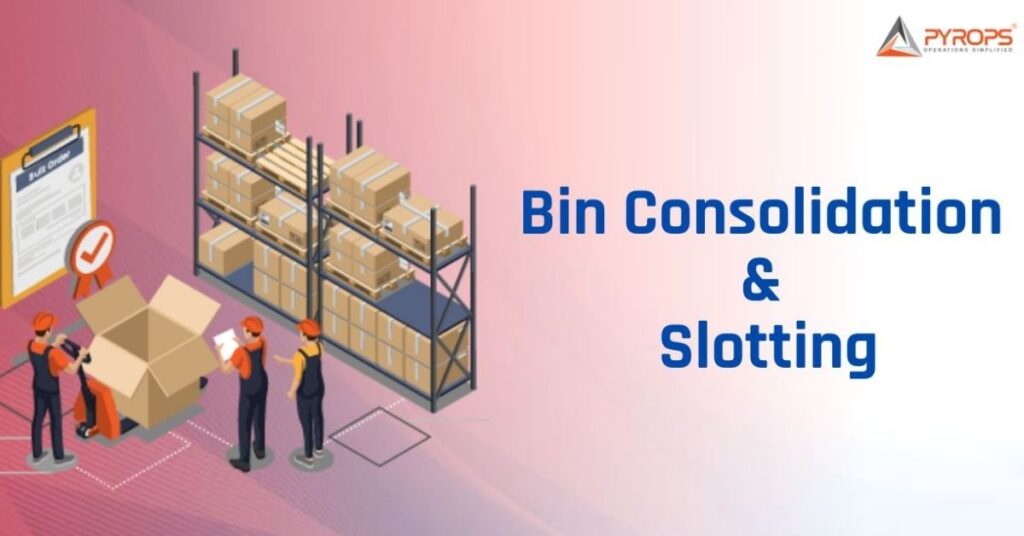
Warehouse slotting is the process of organizing the inventory in a Warehouse Management System to maximize space and efficiency. It is a form of inventory management. A warehouse’s purpose is to act as a buffer between production and customer demand, thanks to Warehouse Management System (WMS) Software. This allows businesses to manufacture products and store them in a way that’s decoupled from immediate needs.  With a need for a WMS System, businesses can fulfill customer orders faster and more efficiently, ultimately reducing costs. WMS software uses a process called slotting to determine the optimal location for each item in the warehouse. Slotting takes into account various factors like item velocity (how often it’s picked), dimensions (cube size), weight, and product groupings. By strategically placing items, businesses can minimize picking times and optimize warehouse space utilization. In essence, WMS software empowers businesses to leverage their warehouses as strategic assets, not just storage facilities. It’s all about bridging the gap between supply and demand smoothly and cost-effectively. Warehouse Slotting Strategy Warehouse slotting optimization strategies can help businesses reduce costs and improve efficiency in a number of ways, including: Let’s see how warehouse management software (WMS) with slotting capabilities can truly supercharge your warehouse operations: Boost order accuracy: Forget the mix-ups! WMS-powered slotting ensures the right items are always in the right places, minimizing picking errors and ensuring customers get exactly what they ordered. Minimize product damage: Say goodbye to bumps and bruises! Slotting considers product dimensions and fragility, placing delicate items in secure, easily accessible locations, reducing the risk of damage during storage and retrieval. Prioritize worker safety: Safety first! By strategically placing heavy or bulky items within easy reach, WMS (Warehouse Management System) slotting optimizes picking routes and minimizes awkward lifting, keeping your team safe and sound. By incorporating these improvements, WMS systems empower businesses to not only store goods efficiently but also cultivate a warehouse that hums with accuracy, protection, and safety. It’s a win-win for business efficiency and employee well-being. What Does Slotting Means in Warehouse Management? Warehouse slotting is a complex process that requires careful planning and consideration. It is important to consider all of the factors that can impact slotting decisions, including: Importance of Warehouse Slotting Different Methods of Slotting Random Slotting Fixed Slotting Macro Slotting Micro Slotting Benefits of Slotting Reorganizing zones, or even an entire warehouse management system, can seem like a daunting and time-consuming project because we need to determine how to store inventory in an optimal way and move large amounts of inventory to different locations correctly, so it does not cause any issues during the picking process. While the slotting process can be a major project that takes time and continuous improvement, it ultimately can benefit your business and positively affect the bottom line. Here are a few ways that slotting helps:- Proper slotting can improve picking accuracy by eliminating any possible confusion for the picker. Storing products that make the most sense for the picker such as by type, size, weight, etc., allows for faster picking. Workers can always know the location of items and how to get there without ever hunting through shelves. Slotting processes can help identify opportunities to increase storage capacity. Taking the time to optimize the warehouse means one can delay expanding and/or spend extra costs on an additional warehouse. By optimizing warehouse space and improving processes, one can keep one’s overall carrying costs down rather than hiring more help or renting out more warehouse space. Besides avoiding damage during transit or packing, a warehouse slotting strategy can also help avoid damage to stored items during handling and processing. Good slotting helps improve employee productivity by allowing them to locate items immediately. This process helps managers and employees immediately understand when an item is not in the right place, which reduces the possibility of errors. What is a Consolidation Warehouse? A consolidation warehouse is a third-party storage facility where several small shipments are gathered together and sorted into groups based on destination, so that  each group can be sent out as one larger, consolidated shipment.Consolidation warehouses are a valuable tool for businesses of all sizes, but they are especially beneficial for businesses that ship a large number of small orders or that need to ship to multiple destinations. Consolidation in warehousing that is operated by a third-party logistics (3PL) company that is responsible for merging small loads into large-size shipments. Inventory Consolidation

Knowledge Series

Freedom from Expiry Losses: How WMS Protects Your Margins and Your Brand

Expiry losses don’t just eat into profits—they silently erode customer trust and brand reputation. Whether you’re in FMCG, pharmaceuticals, or food & beverage, the clock is always ticking on your inventory. This Independence Month, let’s talk about achieving true azaadi from expiry-related losses. The Hidden Cost of Expiry Losses Why Expiry Losses Happen How a WMS Delivers Freedom from Expiry Losses Example A large dairy distribution center implemented WMS with FEFO logic. Within 3 months, they reduced expiry write-offs by 72%, turning what used to be a ₹20 lakh quarterly loss into additional profits. Don’t let your margins expire. With the right WMS, every day is a day closer to azaadi from waste. Learn More Conclusion Expiry losses may feel inevitable, but with the right systems in place, they’re entirely preventable. A modern WMS doesn’t just safeguard your inventory—it safeguards your profits, your brand reputation, and your customer trust. By embracing batch tracking, FEFO automation, and proactive expiry alerts, businesses can transform what was once a recurring loss into a competitive advantage. This Independence Month, take a step towards true freedom—freedom from waste, freedom from shrinking margins, and freedom to grow with confidence. Take the first step towards azaadi from expiry losses. Connect with us to see how a smart WMS can protect your margins and your brand.

Blogs

Inventory Control In Supply Chain Management

Efficient management of the supply chain plays a pivotal role in shaping effective inventory control. When a company effectively oversees both inventory and supply chain management, it gains the ability to fine-tune inventory levels, curtail carrying costs, and enhance overall customer satisfaction. This blog delves into the interconnected realms of inventory control and supply chain management, shedding light on their profound impact and offering insights into how companies can elevate their inventory management practices through a streamlined supply chain management approach. What is inventory control in the WMS System? Inventory control in a Warehouse Management System (WMS) refers to the systematic management and regulation of the quantity, location, and status of goods or products within a warehouse or distribution center. It involves the implementation of strategies and technologies to monitor, track, and optimize the movement and storage of inventory within the warehouse environment. By effectively managing inventory within a WMS system, companies can reduce costs, improve order accuracy, enhance customer satisfaction, and streamline overall warehouse operations. Why Inventory control is important in warehouse management systems? Inventory control is essential in Warehouse Management Systems (WMS) for optimizing warehouse operations. It ensures the right product quantities in the right places, preventing overstock and stockouts. This balance minimizes carrying costs, maximizes storage efficiency, and streamlines order fulfillment. Best warehouse management systems offer real-time visibility, enhancing monitoring and timely replenishment to reduce errors and improve order accuracy, ultimately boosting customer satisfaction. Effective inventory control enables strategic practices like just-in-time management and demand forecasting, leading to cost savings. Leveraging  technologies such as barcode scanning and RFID scanning in supply chain management &  WMS software ensures accurate tracking, minimizing manual errors and improving data precision. In summary, WMS-driven inventory control is vital for optimal warehouse performance, cost-effectiveness, and meeting dynamic customer demands. Inventory Control in Supply Chain Management Forecasting Accuracy: Forecasting demand is a critical aspect of inventory management. When a company accurately predicts the demand for its products, it can optimize inventory levels and reduce the risk of stockouts. Effective supply chain management can help improve forecasting accuracy by providing access to real-time data and trends in demand. Timely Delivery: Timely delivery is critical for effective inventory management. When a company receives its inventory on time, it can maintain optimal inventory levels and avoid stockouts. Effective supply chain management can help ensure timely delivery by establishing clear communication channels with suppliers and logistics providers. Reduced Lead Times: Lead time is the time between placing an order and receiving the inventory. Long lead times can lead to overstocking and increased carrying costs. Effective supply chain management can reduce lead times by streamlining procurement processes and working closely with suppliers. Improved Visibility: Effective supply chain management provides companies with real-time visibility into their inventory levels and supply chain processes. This visibility enables companies to identify inefficiencies and make data-driven decisions that optimize their inventory levels. Reduced Costs: Effective supply chain management can reduce costs associated with inventory management. For example, by optimizing inventory levels, a company can reduce carrying costs. By streamlining procurement processes, a company can negotiate better prices with suppliers and reduce costs associated with placing orders. Improved Customer Satisfaction: Effective supply chain management can improve customer satisfaction by ensuring that products are delivered on time and in good condition. This helps to build customer loyalty and improve the company’s reputation. conclusion Effective supply chain management can significantly impact inventory control within warehouse management software. By improving forecasting accuracy, ensuring timely delivery, reducing lead times, improving visibility, reducing costs, and improving customer satisfaction, companies can optimize their inventory levels, reduce carrying costs, and maximize profitability. Companies can achieve this by investing in the right technology, working closely with suppliers and logistics providers, and continuously monitoring and optimizing their supply chain processes.

Maximizing Profitability Through Efficient Inventory Control
Blogs

Maximizing Profitability Through Efficient Inventory Management

What is an inventory management System? In warehousing operations, an inventory management system (IMS) is a software application that helps businesses track, manage, and optimize their stock levels. It plays a crucial role in streamlining warehouse processes and ensuring smooth fulfillment. Here’s how it works: Need of effective inventory management Inventory management is crucial for businesses, ensuring the right products are available to meet customer demand while avoiding financial setbacks from overstocking or understocking. Efficient management optimizes resources, reducing costs tied to excess inventory and enhancing overall profitability. Robust inventory control systems also track expiration dates, minimizing waste and providing insights into consumer behavior. In essence, effective inventory management is vital for smooth operations, mitigating risks associated with shortages, surpluses, and outdated products, essential for businesses striving to maximize profitability through streamlined processes. Key Functions of an Inventory Management System: Inventory Tracking: The system tracks the quantity, location, and status of all items in the warehouse, including raw materials, finished goods, and work-in-progress items. This real-time visibility allows for informed decision-making and reduces the risk of stockouts. Demand Forecasting: The IMS analyzes past sales data and other relevant factors to predict future demand for each item. This helps businesses optimize their inventory levels by avoiding overstocking and understocking. Purchase Order Management: The system can automate purchase order generation based on predefined reorder points and lead times. This ensures timely replenishment of stock and avoids disruptions in production or fulfillment. Warehouse Layout Optimization: IMS integrates with warehouse management systems (WMS) to optimize warehouse layout and storage strategies. This can involve allocating bin locations based on item popularity and frequency of access, minimizing picking time and improving efficiency. Reporting and Analytics: The system generates reports on inventory levels, stock movements, and other key metrics. These insights help businesses identify trends, analyze performance, and make data-driven decisions about inventory management. Benefits of an Inventory Management System: Increased efficiency: Reduces picking and packing times, improves accuracy, and optimizes warehouse space utilization. Reduced costs: Minimizes overstocking and understocking, lowers holding costs, and improves supply chain efficiency. Improved customer satisfaction: Ensures timely order fulfillment and reduces the risk of stockouts and backorders. Enhanced data-driven decision-making: Provides real-time visibility and insights to make informed decisions about inventory management, purchasing, and production. Improved collaboration: Integrates with other systems like WMS and accounting software, facilitating seamless data exchange and collaboration between departments. Efficient inventory control is essential for businesses of all sizes to remain competitive and maximize profitability. Proper inventory management allows businesses to optimize their supply chain, reduce costs, and improve customer satisfaction. In this blog, we will explore how efficient inventory control can help businesses maximize profitability. Optimized Supply Chain Efficient inventory control allows businesses to optimize their supply chain by ensuring that they have the right inventory levels at the right time. This means that businesses can reduce lead times, improve order fulfillment rates, and reduce the risk of stockouts. By having a streamlined supply chain, businesses can reduce costs and improve their bottom line. Reduced Costs Effective inventory control can also help businesses reduce costs. By maintaining optimal inventory levels, businesses can avoid overstocking, which ties up valuable capital and increases storage costs. On the other hand, stockouts can lead to lost sales and the costs associated with expedited shipping. By finding the right balance, businesses can reduce their inventory costs and improve their profitability. Improved Customer Satisfaction Efficient inventory control can also improve customer satisfaction. By maintaining optimal inventory levels, businesses can ensure that they have the right products in stock when customers need them. This reduces the risk of stockouts and improves order fulfillment rates, leading to happier customers. Happy customers are more likely to become repeat customers, which helps businesses increase revenue and profitability. Automation Automation is another way that businesses can improve their inventory control and maximize profitability. By automating inventory processes, businesses can reduce the risk of human error and improve accuracy. This means that businesses can maintain optimal inventory levels more efficiently and reduce the costs associated with manual inventory management. Data Analytics Finally, data analytics is a powerful tool that businesses can use to improve their inventory control and maximize profitability. By analyzing sales data, customer behavior, and market trends, businesses can make informed decisions about inventory levels and product offerings. This means that businesses can reduce the risk of overstocking or understocking and optimize their inventory for maximum profitability. In conclusion, efficient inventory control is critical for businesses to remain competitive and maximize profitability. By optimizing the supply chain, reducing costs, improving customer satisfaction, using automation, and leveraging data analytics, businesses can improve their inventory management and increase their bottom line. By taking a strategic approach to inventory control, businesses can position themselves for success in the long term. Read more blogs

The Role of Technology in Modern Inventory Management
Blogs

The Role of Technology in Modern Inventory Management

What is a Warehouse Inventory Management System? A Warehouse Inventory Management System (WIMS) is a software solution designed to streamline and optimize the warehouse inventory tracking system and related processes within your warehouse. It automates and centralizes various tasks, from receiving and storing goods to tracking inventory levels, fulfilling orders, and managing returns. In today’s competitive business landscape, efficient warehousing and inventory management are no longer just optional, they’re essential. Investing in advanced warehouse and inventory management software can be the key to unlocking significant logistical improvements and gaining a crucial edge. Warehouse inventory tracking software solutions offer a comprehensive suite of features designed to transform your warehouse stock management. Real-time visibility into inventory levels, automated order fulfillment workflows, and minimized errors are just the tip of the iceberg. By leveraging the power of warehouse and inventory management software. What is the Inventory Management System? Inventory management is the process of efficiently tracking and managing a company’s inventory levels. While traditional methods of inventory management, such as manual tracking, can be effective, they are often time-consuming and prone to human error. This is where technology comes in, revolutionizing inventory management and making it easier and more efficient than ever before. In modern inventory control warehouses, technology plays a vital role in improving accuracy, reducing costs, and increasing profitability. Here are some of the ways technology has changed the face of inventory management in warehouse: Automated inventory tracking systems One of the most significant advantages of technology in warehouse inventory management systems is the automation of warehouse inventory tracking. With the help of automated systems, companies can track inventory levels, monitor stock movements, and receive real-time updates about their inventory status. This saves time and eliminates the need for manual inventory tracking, which is prone to errors. RFID Technology Radio Frequency Identification (RFID) technology is another innovation that has revolutionized inventory management. RFID tags are attached to inventory items, which allows them to be tracked and monitored as they move throughout the supply chain. RFID technology enables companies to monitor inventory levels in real time, reduce the risk of stockouts, and increase supply chain visibility by using warehouse inventory management software. Cloud-based inventory management systems Cloud-based inventory management systems in warehouses have made it easier than ever for businesses to manage their inventory levels. These systems enable companies to access inventory data from anywhere, at any time and make informed decisions based on real-time information. Additionally, cloud-based systems allow for seamless collaboration between teams and can be easily integrated with other business applications. Forecasting and Analytics Another significant advantage of technology in warehouse inventory tracking is the ability to use forecasting and analytics to predict demand and optimize inventory levels. By analyzing historical data and using advanced algorithms, companies can forecast demand and make informed decisions about inventory levels. This not only saves time and reduces costs but also ensures that the company always has the right inventory levels to meet customer demand. Challenges In Implementing Technology in Warehouse Inventory Management Technology has revolutionized warehouse inventory management system, offering many advantages like enhanced efficiency, improved accuracy, and reduced costs. However, integrating these innovative solutions comes with its own set of challenges that businesses need to address effectively. Initial cost associated with implementation Investing in warehouse inventory software, hardware, training, and ongoing maintenance can be substantial, especially for smaller businesses. This necessitates careful planning, budgeting, and exploring cost-effective solutions like cloud-based platforms or subscription models. Adopting new technology It requires a significant shift in existing processes and workflows. Employees may face a learning curve, and resistance to change can hinder the smooth integration of the technology. Implementing comprehensive training programs, addressing concerns transparently, and encouraging feedback are crucial to overcoming user adoption challenges. Data accuracy and consistency These are crucial for effective warehouse inventory management. Mismatched or inaccurate data can lead to errors in stock levels, order fulfillment, and other critical processes. Businesses need to invest in data quality initiatives, establish clear data governance policies, and implement robust data validation procedures to ensure data integrity. Interoperability issues This can arise when integrating different technologies within the warehouse. Ensuring seamless communication and compatibility among various systems, such as inventory management software, barcode scanners, and other devices, is essential for achieving optimal efficiency. Open-source platforms, standardized data formats, and API integrations can help overcome these challenges. Why To Choose Pyrops Warehouse Inventory Management Software Choosing the right Warehouse Inventory Management Software is crucial for your business success. With Pyrops, you get more than just warehouse inventory software – you get a partner dedicated to transforming your warehouse operations. Gain real-time visibility into your inventory, optimize order fulfillment, and enhance overall efficiency. From automated workflows to comprehensive reporting, we redefine the way you manage inventory.  Conclusion In conclusion, technology has played a significant role in modern warehouse  inventory management software, making it more efficient, accurate, and profitable. Automated warehouse inventory tracking systems, RFID technology, cloud-based inventory management systems, and forecasting and analytics are just a few examples of how technology has transformed the way businesses manage their inventory levels. Companies that leverage technology to improve their inventory management processes can gain a significant competitive advantage and drive business success.

Inventory Turnover
Blogs

Inventory Turnover: What it is and How to Improve it

Inventory turnover is a measure of how quickly a company sells its inventory and replaces it with new inventory. It’s an essential metric for evaluating a company’s efficiency in managing its inventory. The higher the inventory turnover, the more efficient the company is at managing its inventory. Here’s a breakdown of how to calculate inventory turnover and improve it: Calculating Inventory Turnover Inventory turnover is calculated by dividing the cost of goods sold by the average inventory level. The formula is as follows: Inventory Turnover = Cost of Goods Sold / Average Inventory Level To get the average inventory level, add the beginning and ending inventory levels for a given period and divide by two. Improving Inventory Turnover Improving inventory turnover can help a company increase sales and profits, reduce inventory carrying costs, and avoid stockouts. Here are some strategies to improve inventory turnover: Forecast Demand: Use data and trends to forecast demand accurately. This helps to minimize overstocking and stockouts. Streamline Procurement: Implement an efficient procurement process to ensure that inventory is delivered on time and in the correct quantities. Optimize Inventory Levels: Keep inventory levels at an optimal level to prevent overstocking and reduce carrying costs. Implement Just-In-Time Inventory: Just-in-time inventory helps reduce inventory levels and improve inventory turnover by ordering inventory only when it’s needed. Use Inventory Management Software: Implement inventory management software that helps automate inventory management tasks, analyze inventory data, and generate reports. Improve Inventory Accuracy: Conduct regular physical inventory counts to ensure inventory accuracy and prevent losses due to theft or damage. Prioritize Inventory: Prioritize inventory based on demand and profitability to ensure that the most profitable and in-demand items are always in stock. In conclusion, inventory turnover is a critical metric that indicates a company’s efficiency in managing its inventory. By forecasting demand accurately, streamlining procurement, optimizing inventory levels, implementing just-in-time inventory, using inventory management software, improving inventory accuracy, and prioritizing inventory, a company can improve its inventory turnover, reduce carrying costs, and maximize profitability. Read more blogs

Pyrops® WMS is a warehouse management software designed, developed, and implemented by Precision Pyramid Private Limited.

For more info visit: www.precisionpyramid.com

India Head Office

A-1, Forest Lane, Near Ghitorni Metro Station, MG Road, Sultanpur, New Delhi – 110030

Nepal Corporate Office

Precision Pyramid Nepal Private Limited 6th Floor, Radha Bhawan, Tripureshwar, Kathmandu, Nepal

Contacts

Follow us

Scroll to Top