
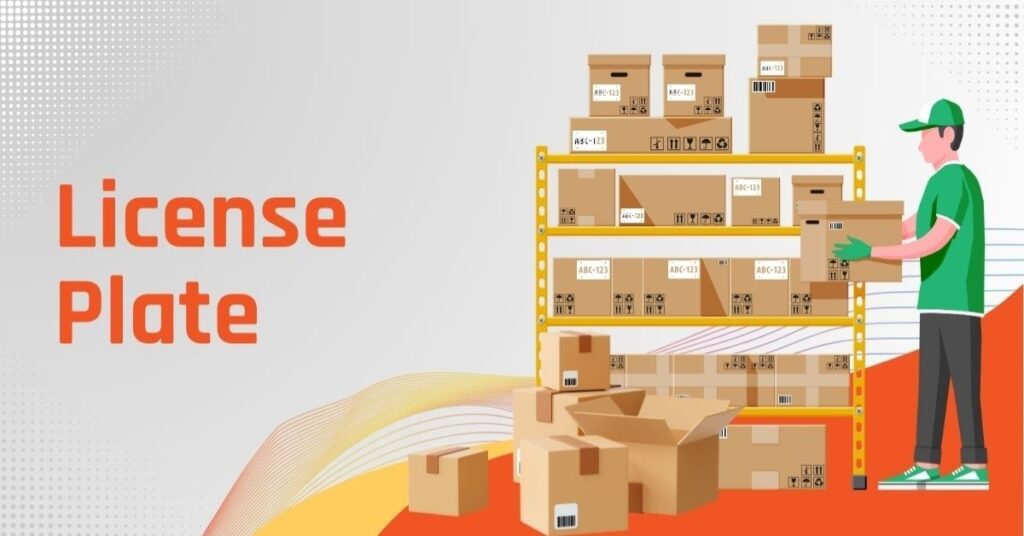
License Plate
Manual or outdated processes often slow warehouse operations. With evolving technology and a significant shift towards automation, warehouse operators are constantly assessing what additions to implement for increased efficiency. One such process to consider automating is how you scan and track inventory – using license plates. Inventory license plating plays a crucial role in the identification process to mark a pallet or group of materials and products. Warehouse automation is revolutionizing inventory management through the utilization of warehouse license plates (LPNs) within warehouse management systems (WMS).Warehouse automation is revolutionizing inventory management through the utilization of warehouse license plates (LPNs) within warehouse management systems (WMS). A primary benefit of LPN WMS is its ability to move entire pallets or groups of materials without individually scanning each item. This streamlines inventory management, reducing the risk of errors and improving efficiency. WMS LPN systems provide workers with a single scan to track and access critical data, easing the burden of manual data entry and error-prone processes. What is a License Plate? License plating is a barcode reader system that groups together any set of materials or products and marks it with a unique number known as a License Plate Number (LPN). The identifier, called a License Plate Number (LPN), is assigned to a pallet, truck, product set, etc. Moreover, the LPN number can also be assigned to the whole shipment or partial shipment depending on how one wants to receive or deliver the products. The LPN is tracked via barcode or RFID onto an LPN label for a quick, easy scan. As a result, the scan provides all information included in the LPN. Additionally, a single license plate can contain multiple data points, such as: What is lpn in the warehouse? Optimizing efficiency is paramount to ensuring smooth order fulfillment in any warehousing operations. The integration of technology plays a pivotal role in achieving this goal, and Warehouse License Plate Numbers (LPN) have emerged as a cornerstone in this pursuit. LPN warehouses have revolutionized the way inventory is scanned and tracked, introducing a level of precision and accuracy that was previously unattainable. The synergy of LPN barcode scanners and LPN in Warehouse Management Systems (WMS) ensures a seamless and accurate identification process. LPN barcode scanners enable operators to quickly and easily capture LPN data, while LPN in WMS provides a centralized repository for this information. This integrated approach allows for precise marking of pallets and efficient management of materials throughout the warehouse, streamlining operations and enhancing overall productivity. How does License plating help businesses? License plate numbers (LPN’s) help in distinguishing each item for better lot management and traceability, and they also reduce the number of scans required to enter during a transaction. More specifically, license plating can help your businesses be more efficient in multiple ways. Firstly, it enables streamlined inventory management, allowing for easier tracking of items throughout the supply chain. Secondly, it facilitates faster order fulfillment as products can be grouped together and processed as a single unit. Additionally, license plating enhances accuracy in shipping and receiving processes, reducing the risk of errors and minimizing potential delays. Moreover WMS LPN, it simplifies warehouse operations, making it easier for workers to locate, pick, and pack items. Furthermore, license plating promotes better data visibility and analysis, enabling businesses to make informed decisions and optimize their logistics strategies. Overall, implementing a license plating system in a warehouse management system can significantly improve your operational efficiency and enhance your overall supply chain management. Role of License plate numbers (LPN) in warehouse Inbound Operations Role of LPN in Outbound operations The LPN Process can be used for internal transfers between the plants or different warehouses. Advantages of using LPN WMS Read More: Barcode scanning an overview