Warehouse Operations Simplified

Quick Commerce

Case Study

Case Study – Dark Store Fulfilment

Case Study – Dark Store Fulfilment   Thank you for Signing Up Download Case Study   Please correct the marked field(s) below.Name *1,true,1,Name,2Company Name *1,true,1,Company Name,2Contact Email *1,true,6,Contact Email,2Contact No. *1,true,8,Contact No.,2**Required Fields Note: It is our responsibility to protect your privacy and we guarantee that your data will be completely confidential.

Blogs

Demystifying Quick Commerce, Rapid Commerce, and E-commerce — What’s the Real Difference?

Delivery speed has become a battleground in the e-commerce world. What once was a standard 3–5 day delivery is now considered slow. Consumers, especially in urban centers, expect same-day or even 10-minute deliveries. To meet these expectations, businesses are transforming their supply chain design, infrastructure, and operational strategy. In this article, we break down the three main e-commerce delivery models—Standard, Quick Commerce, and Rapid Commerce—and explore how each impacts the backend supply chain, geography, environmental footprint, and long-term sustainability. The 3 Layers of E-commerce Delivery Models 1. Standard E-commerce Delivery (1–5 Days) Examples: Amazon Standard Shipping, Flipkart, Myntra, Lazada Supply Chain Design: Strengths: Challenges: 2. Quick Commerce / Q-Commerce (10–30 Minutes) Examples: Zepto, Blinkit Supply Chain Design: Strengths: Challenges: 3. Rapid Commerce (Same-Day or 1–12 Hours) Examples: Amazon Prime, BigBasket Express, Instacart Supply Chain Design: Strengths: Challenges: Why Some Delivery Models Succeed Only in Specific Geographies Factors that influence delivery model viability: Which Model Is the Most Environmentally Friendly? Delivery Model Environmental Impact (Lower is Better) Why Standard E-com ✅ Lowest Fewer trips, consolidated loads, optimized line-haul routes Rapid Commerce ⚠️ Medium More delivery trips, but optimized routing and batch delivery possible Quick Commerce ❌ Highest 1-trip per order, limited load efficiency, high packaging & battery waste Conclusion: From a carbon footprint perspective, standard e-commerce is the most sustainable. However, rapid commerce can find a balance if deliveries are intelligently batched and eco-friendly transport (like e-bikes) is used. Final Thoughts: Strategy vs. Speed The choice of delivery model isn’t just about logistics—it’s a strategic decision: Ultimately, the right delivery model depends on what your customers want—and what your business can deliver consistently, profitably, and responsibly. Read More Read SCM News

Comparing Dark Store Fulfillment & Ecommerce Fulfillment
Blogs

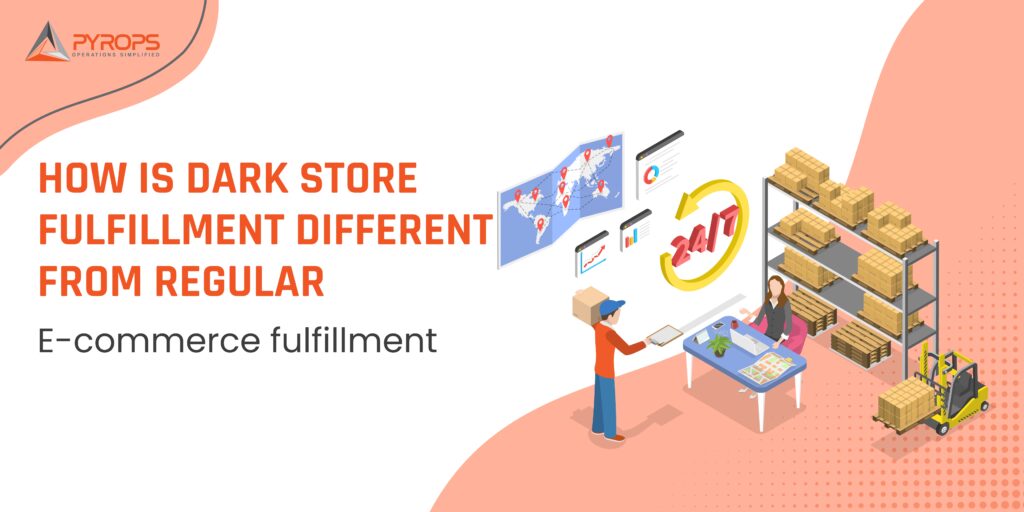
How is dark store fulfillment different from regular E-commerce fulfillment

In the domain of ecommerce warehouse management, two distinct models have emerged to accommodate the evolving preferences of customers: Traditional Ecommerce Warehouse Management System from conventional distribution centers and Hyperlocal Ecommerce Warehouse Management System from specialized, hyperlocal warehouses. These two approaches showcase significant differences in various critical aspects, each intricately designed to fulfill distinct customer requirements and adapt to market dynamics. Let’s explore the disparities between these ecommerce warehouse management types to gain a deeper understanding of their unique features. What is Ecommerce Warehousing? E-commerce warehousing pertains to the storage, organization, and fulfillment of goods within a specialized facility explicitly crafted to facilitate online retail operations. Within the realm of e-commerce, the effectiveness of the warehouse management system is pivotal in the supply chain, guaranteeing the timely and accurate storage, organization, and shipping of products to customers. In the context of an e-commerce warehouse, the focus is on employing efficient warehouse management systems (WMS) and specialized software designed for e-commerce. These tools play a crucial role in organizing the seamless flow of goods, ensuring optimal inventory control, and expediting order fulfillment to meet the demands of online retail operations. Key features of e-commerce warehousing include: Order Fulfillment: WMS for ecommerce are equipped to handle the picking, packing, and shipping of individual customer orders. This involves locating products within the warehouse mgmt software, packaging them securely, and arranging for their timely delivery. Inventory Management: Effective e-commerce warehouse management software involves meticulous tracking and management of inventory levels. This helps prevent stockouts, overstock situations, and enables accurate real-time visibility into the availability of products. Technology Integration: Many e-commerce warehouses leverage advanced technologies, such as Warehouse Management Systems (WMS) and automation tools, to streamline operations, enhance accuracy, and improve overall efficiency. Location Considerations: Warehouses management system e-commerce are often strategically located, considering factors like proximity to major markets, transportation hubs, and customer bases. This helps in reducing shipping times and costs. Scalability: WMS software for ecommerce must be adaptable to handle fluctuations in demand, especially during peak seasons or promotional events. Scalability ensures that the warehouse can efficiently manage varying order volumes. Returns Processing: E-commerce warehouse management includes processes for handling product returns, which is a critical aspect of online retail. Efficient return processing contributes to customer satisfaction and inventory management. Overall, the e-commerce warehouse management system is a specialized form of logistics infrastructure designed to meet the unique challenges and demands of online retail, aiming to provide customers with a seamless and satisfactory shopping experience. What is a dark warehouse? Dark warehouses, equipped with Warehouse Management Systems (WMS) tailored for ecommerce, offer several advantages over traditional brick-and-mortar stores when it comes to fulfilling online orders. Typically situated in urban areas, these dark warehouses provide expedited delivery times. Their layouts and processes are precisely optimized for the efficient picking and packing of orders in the realm of warehouse fulfillment services. Moreover, dark warehouses contribute to cost reduction strategies for retailers. By enabling the storage of more inventory in a confined space, they assist in curbing inventory costs. Additionally, labor costs can be minimized through task automation within the spectrum of warehousing and fulfillment services. In essence, dark warehouses, supported by WMS software designed for ecommerce, emerge as a valuable asset for retailers of all scales seeking enhancements in their e-commerce fulfillment operations. 1. Warehouse Size: Warehouse Fulfilment: Large, centralized distribution centers with substantial storage capacity. Dark Store Fulfilment: Compact, local warehouses are often located in urban areas to facilitate quick deliveries. 2. Number of SKUs (Stock Keeping Units): Warehouse Fulfilment: Typically offers a wide range of SKUs, catering to diverse product lines. Dark Store Fulfilment: Limited SKUs, often focusing on a curated selection of fast-moving products. 3. Distance from Customer: Warehouse Fulfilment: May involve shipping products across national or regional distribution centers, resulting in longer transit times. Dark Store Fulfilment: Located within or near urban centers, ensuring hyperlocal proximity to customers for rapid deliveries. 4. Time Sensitivity: Warehouse Fulfilment: While warehouse fulfillment operations are SLA-backed, there may be some flexibility in delivery timing or sequence. Dark Store Fulfilment: It is highly time-sensitive, emphasizing fast deliveries to meet customer expectations, with SLAs often measured in hours. 5. Delivery Modes: Dark Store Fulfilment: Often employs two-wheeler fleets, bicycles, or on-foot couriers optimized for quick, last-mile deliveries. Warehouse Fulfilment: Utilizes larger delivery fleets, including trucks and vans, optimizing for cost-efficiency over speed. 6. Route Planning: Dark Store Fulfilment: Route planning is critical to meet stringent SLAs, requiring precise coordination to ensure on-time deliveries. Warehouse Fulfilment: While route planning is important in RF, there may be more flexibility in timing or sequence of deliveries due to broader service areas. 7. Returns: Dark Store Fulfilment: Typically supports doorstep verification and returns, offering convenience and quick processing. Warehouse Fulfilment: Returns often follow a more controlled and lengthier process due to centralized facilities. 8. Needs They Address: Dark Store Fulfilment: Dark stores primarily address the need for immediate consumption and convenience, focusing on impulse buys and essential items like groceries, electronics accessories, or personal care products. Warehouse Fulfilment: This fulfilment models serves a broader customer base, accommodating a wide range of products, including bulk goods, specialized equipment, and items with less time-sensitive demand. Conclusion While both warehouse fulfillment services and dark store fulfillment aim to meet customer demands, they do so in distinctive ways. Warehousing & fulfillment services leverages large warehouses to serve a diverse range of products over broader geographic areas, prioritizing cost-efficiency. On the other hand, Dark Stores operate in smaller, urban-centric facilities, emphasizing speed and convenience for hyperlocal customers seeking immediate access to essential items.  Understanding differences in fulfillment for ecommerce & dark stores is essential for businesses to tailor their fulfillment strategies to effectively meet the expectations of their target audiences.

Do we really need 10-minute warehouse delivery
Blogs

Do we really need 10-minute warehouse delivery?

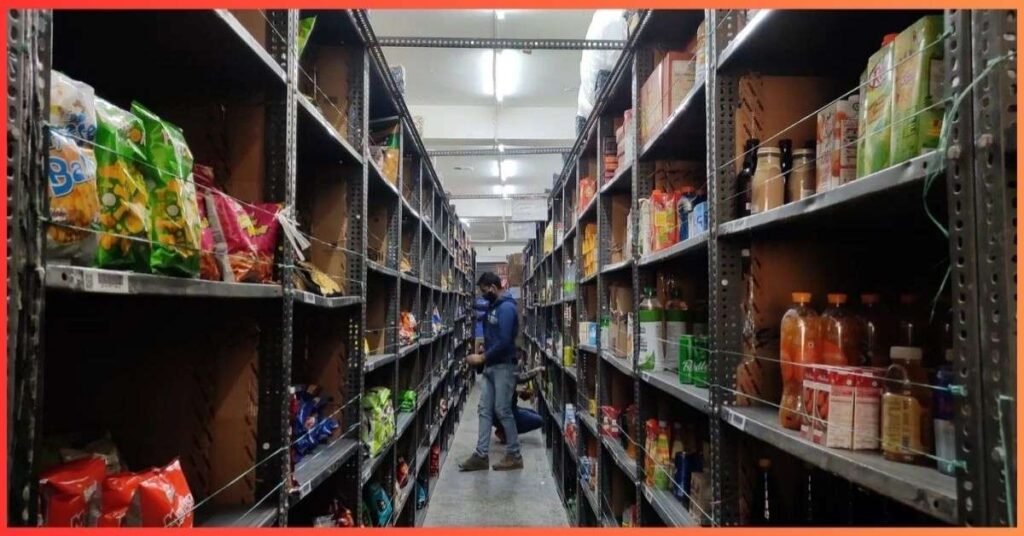
Market dynamics are forcing e-commerce companies to constantly evolve and undercut each other. Companies are competing not only on pricing and quality but also on how fast they reach your doorstep i.e 10-minute delivery. The pandemic played a pivotal role in catapulting premier online grocery shopping services into the mainstream, transforming a significant portion of the $2 trillion global grocery market. As a result of widespread preference for grocery delivery services during the pandemic, industry leaders and emerging players are now delving into a burgeoning sector known as quick commerce or q-commerce. The integration of warehouse management systems (WMS) solutions has become a key enabler in this evolution. The market penetration of quick-commerce, with the aid of WMS solutions, reached an estimated $0.3 billion in 2021, and projections indicate substantial growth to $5 billion by 2025 in India. Quick commerce startups, commonly referred to as 10-minute delivery apps, empower customers to conveniently order groceries and essential items through their mobile phones. These products are housed in dark stores, compact warehouses strategically positioned across urban areas. Utilizing warehouse management system software, these startups efficiently manage inventory and logistics. However, towards the end of 2022, these quick commerce ventures encountered significant challenges, including substantial financial losses, insufficient funding, and heightened competition. Consequently, they had to streamline operations, downsize their workforce, and shutter dark stores. Numerous startups, ranging from major players to smaller entities, are swiftly entering the realm of q-commerce. A significant shake-up has occurred in the grocery delivery sector with the emergence of Zepto, a new entrant that employs a 10-minute grocery home delivery service. Blinkit, formerly known as Grofers, has initiated 10-minute grocery delivery in multiple cities. Swiggy has introduced Instamart, committing to a delivery timeframe of 20-30 minutes. Dunzo has rolled out Dunzo Daily, and Ola is in the early stages of testing rapid grocery delivery in Bengaluru, showcasing the industry’s dynamic landscape driven by warehouse management software. Who needs 10-minute delivery? Shifting to digital platforms to promote cashless transactions, the world has gone through extreme ramifications that now appear to be promoting a permanent behavioral shift. India’s retail market is huge: $800 billion. And it’s dominated by the 11 million Kirana shops!! One can get all things from nearby Kirana shops. So why should one order online? More importantly – who needs 10-minute delivery and is there a real business use case here? To answer this, let’s understand how we are wired as humans. Humans optimize for time naturally, regardless of whether there is an urgency or not. In general, we tend to optimize for time if there is a way to accomplish something in less time. To this extent – whether consumers ‘need’ delivery services near– is a moot question. If two companies are offering the same products at the same prices, we will naturally choose the one which services in less time. Having said that – quick commerce is more relevant for unplanned buys, impulse or emergency purchases but whether 10-minute delivery is feasible as a business model is a completely different discussion that requires delving into the economics of best grocery online. Is 10-minute delivery the next big thing in the warehouse management system? Speed delivery with warehouse management system According to Supply Chain Dive, as the industry approaches its peak season, supply chain leaders will confront fresh challenges attributable to expansion. Although this season is poised to establish new benchmarks, growth rates are not anticipated to surpass those observed in 2018. Nonetheless, escalating and distinctive customer demands persist, and any oversight in preparing for heightened demand, particularly within systems of record, will not be excused. It is imperative for supply chain leaders to comprehend the potential repercussions of failures in the warehouse management system (WMS) on customer experiences and operational efficiency. Additionally, adopting a set of best practices is crucial to enhance the speed of fulfillment and delivery during the peak season and beyond. How to Use a WMS to Increase Delivery Speed Using a Warehouse Management System (WMS) can really speed up deliveries and make things run more smoothly. WMS lets you see what’s in stock in real-time, making it easier to manage orders. It automates tasks like picking, packing, and shipping, which reduces mistakes and makes the whole order process faster. Keeping track of inventory efficiently ensures that products are ready to ship, cutting down on delays. WMS also gives you data and reports to find any issues in your supply chain and improve them. If you add technologies like barcode scanning and RFID tracking, it makes handling goods even quicker. So, by making the most out of a WMS, businesses can handle busy times better and meet customer expectations with faster and more accurate deliveries. Many startups are considering using dark stores in their supply chain delivery. How does 10-minute delivery work? Let’s first understand how 10-minute delivery works as a concept. Mini Warehouses or Dark Stores To deliver items in 10 minutes, warehouses need to be closer to people’s homes. That’s why these quick delivery apps create lots of mini-warehouses or dark stores in every city. Dark stores or micro-warehouses are located close to the point of delivery. Each dark store manages a focused set of 2,000-2500 stock-keeping units (SKUs) or distinct product items. Startups are using Technologies inside these dark stores to reduce the processing time for orders. Dark stores, also known as micro-fulfillment centers (MFCs), are small, hyper-localized warehouses that store products for online orders. They are typically located in densely populated areas, and customers cannot visit them in person. Instead, customers order products through a mobile app, and dark store employees pick and pack the orders for delivery. Dark stores are much smaller than traditional e-commerce warehouses, typically occupying only 2,000 to 5,000 square feet. Dark stores need automation, good locations, smart design, and efficient order pickers to be successful. Their layouts are different from retail stores and warehouses because they are only used to fulfill orders quickly with quick delivery apps. For example, Blinkit (formerly

Blogs

Grocery fulfillment is fast evolving – Are you keeping pace?

Grocery fulfillment is fast evolving!. Customer expectations for precision, flexibility, and fast deliveries are continually increasing with grocery shopping. These rising expectations warrant increasing efforts and investments in technology. Hence, comprehensive order management and warehouse management systems play a vital role in streamlining multiple functions related to the throughput of groceries and their delivery. The following are some key aspects of grocery fulfillment that apply to tech-enabled operations: Controlling pilferages/ shortages/damages and expiry Extended produce quality and shelf-life – Rejected items are more efficiently separated and removed from good quality grocery products with the help of quality checks, both while receiving and outbound operations. This prevents cross-contamination and premature deterioration. Expiry date tracking – Pyrops WMS lets you track minimum shelf life so that you don’t accept orders that are likely to expire and add to your costs of wastage and also the outward shelf life to ensure the consumer has sufficient time for consumption before it goes stale. Pilferage -With accurate visibility of location-wise stock and continuous inventory control activities. Pyrops helps to reduce grocery pilferages. Identification and segregation of damaged products – It helps in timely corrective action. This helps get better visibility of stock. Also, it helps project the right inventory levels to the sales channels. Replenishment between locations Some organizations have multiple location-based fulfillment operations or they may have a mother warehouse. That can replenish the stock of its distribution centers in various locations. Also responsible for the shipping and delivering the orders to consumers. Pyrops WMS strengthens the coordination between the mother warehouse and the distribution centers. Real-time updating of inventory Facilitating quick decision making The customized procedure of transfer orders and approval Benchmarking and monitoring the inventory thresholds Batch/Lot management For maintaining First Expiry First Out (FEFO) operations, you need clear visibility of batch-wise stock in the warehouse The system should ensure that it doesn’t allow multiple batches of the same product to get mixed on the same storage location. It helps to Batch control/lot control is critical for grocery warehousing Fulfillment accuracy – scan based order packing Aligns the packaging process with picking strategy – Picking is also optimized by Pyrops, ensuring that it reduces the travel time considering the location of the products and the number of pickers available with various picking strategies. Considering the packing parameters like scanning an item, wrapping, printing, and the time that is required to pack the next item. Pyrops helps to avoid that waiting time and congestion. Real-time visibility of workflows – This is the most important aspect that ensures that you can achieve the required TAT through a user-friendly dashboard, intuitive graphical representation of workflow information, and optimal visual monitoring. Demand planning – This enables the warehouse to get prepared and organized in a forward-thinking manner. You can also organize the storage of goods in a way that products with frequent demand are easily accessible. Also, you can adjust other resources and strategies, like the required workforce and picking/packing strategies, according to the changes. Pick a face and bulk storage areas in the warehouse Pyrops help to add agility and speed in the everyday fulfillment activates by organizing the warehouse processes that are already being performed. Pick face is the zone in which you keep material quantities worth 2-3 days of fulfillment. Therefore, this zone is highly accessible. And bulk storage is the place where you store and use most of the products for replenishing the pick face area so that there is no hindrance in the picking activities. The WMS governs this arrangement in a way that it- Reduces the transit time during picking by optimizing the picking footprint Supports various picking activities according to the orders and the product characteristics Ensure that there is proper coordination, ensuring that pick faces are being replenished as and when required. Fulfillment optimization/ Material distribution Pyrops not only can increase the efficiency of labor and internal activities but apply a holistic approach towards supply chain management. As it also supports efficient material distribution with the following approaches: – 1. Prioritize order fulfillment based on customer SLA – It allows to prioritize orders for delivery allotment based on the order SLA. You can then choose the delivery service partner best suited to accomplishing the desired SLA. 2. Route plan-based fulfillment – It will be extremely beneficial to have your fleet tied in from various delivery service partners to your WMS to track their capabilities. Some service partners are quick with certain locations and pin codes, also they are efficient in handling certain kinds of products. So you can automatically rout them across customer orders. Returns management Returns management is a significant part of products like groceries where consumer preferences are not too specific and the prices are not that significant. Hence, Pyrops understands the opportunities, and the challenges associated with reverse logistics and helps you to make the most out of it by: Ensuring prompt and needful actions for returned goods Identify fit to use stock ERP integration, ensuring swift returns management for the consumers Fulfillment visibility/tracking Fulfillment visibility is even more significant for shop floor inventory transactions and increasing the throughput for groceries as the demand is frequent and relatively small in quantities. Real-time data for work order and labor movement becomes a necessity to ensure:- Better use of existing facilities Prompt confirmations and auto-assignment of storage bins Control inventory levels to reduce operating costs Increased mobility and convenience. We ensure that we meet these goals through standardized reporting and efficient data capture, both of which are conducive to the following WMS capabilities: – 1. Dock management When loads of perishables arrive, dock management becomes more critical. You can prepare your staff for inbound shipments, knowing exactly what is due to come in. They’ll verify products and quantities, record any discrepancies, perform quality checks and move the process smoothly into the put-away stage. Detailed visibility of your inbound operations allows you to optimize and manage the flow of goods. 2. Replenishment Cycles Pyrops WMS helps you

Pyrops® WMS is a warehouse management software designed, developed, and implemented by Precision Pyramid Private Limited.

For more info visit: www.precisionpyramid.com

India Head Office

A-1, Forest Lane, Near Ghitorni Metro Station, MG Road, Sultanpur, New Delhi – 110030

Nepal Corporate Office

Precision Pyramid Nepal Private Limited 6th Floor, Radha Bhawan, Tripureshwar, Kathmandu, Nepal

Contacts

Follow us

Scroll to Top