Warehouse Operations Simplified

Supply Chain Management

Blogs

Inventory Control In Supply Chain Management

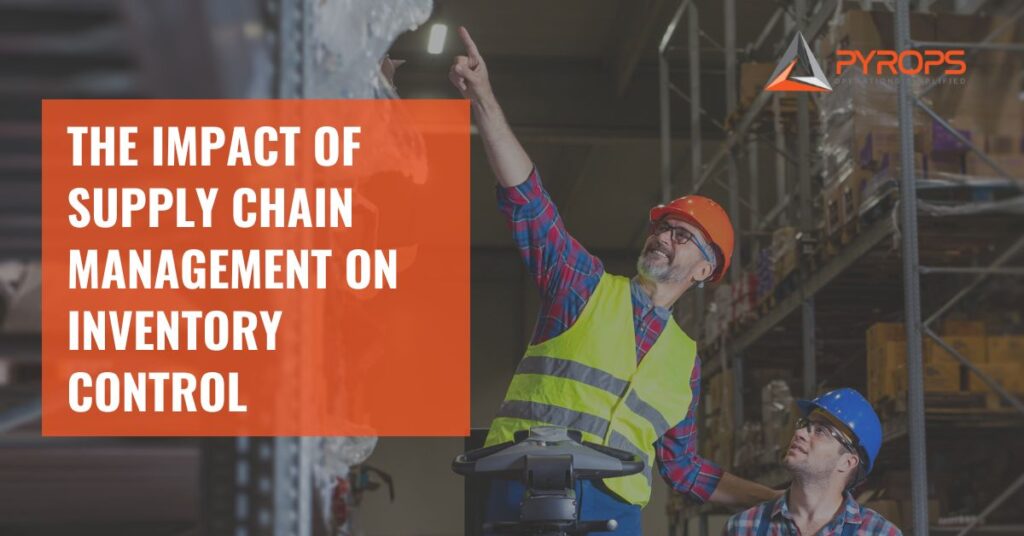
Efficient management of the supply chain plays a pivotal role in shaping effective inventory control. When a company effectively oversees both inventory and supply chain management, it gains the ability to fine-tune inventory levels, curtail carrying costs, and enhance overall customer satisfaction. This blog delves into the interconnected realms of inventory control and supply chain management, shedding light on their profound impact and offering insights into how companies can elevate their inventory management practices through a streamlined supply chain management approach. What is inventory control in the WMS System? Inventory control in a Warehouse Management System (WMS) refers to the systematic management and regulation of the quantity, location, and status of goods or products within a warehouse or distribution center. It involves the implementation of strategies and technologies to monitor, track, and optimize the movement and storage of inventory within the warehouse environment. By effectively managing inventory within a WMS system, companies can reduce costs, improve order accuracy, enhance customer satisfaction, and streamline overall warehouse operations. Why Inventory control is important in warehouse management systems? Inventory control is essential in Warehouse Management Systems (WMS) for optimizing warehouse operations. It ensures the right product quantities in the right places, preventing overstock and stockouts. This balance minimizes carrying costs, maximizes storage efficiency, and streamlines order fulfillment. Best warehouse management systems offer real-time visibility, enhancing monitoring and timely replenishment to reduce errors and improve order accuracy, ultimately boosting customer satisfaction. Effective inventory control enables strategic practices like just-in-time management and demand forecasting, leading to cost savings. Leveraging  technologies such as barcode scanning and RFID scanning in supply chain management &  WMS software ensures accurate tracking, minimizing manual errors and improving data precision. In summary, WMS-driven inventory control is vital for optimal warehouse performance, cost-effectiveness, and meeting dynamic customer demands. Inventory Control in Supply Chain Management Forecasting Accuracy: Forecasting demand is a critical aspect of inventory management. When a company accurately predicts the demand for its products, it can optimize inventory levels and reduce the risk of stockouts. Effective supply chain management can help improve forecasting accuracy by providing access to real-time data and trends in demand. Timely Delivery: Timely delivery is critical for effective inventory management. When a company receives its inventory on time, it can maintain optimal inventory levels and avoid stockouts. Effective supply chain management can help ensure timely delivery by establishing clear communication channels with suppliers and logistics providers. Reduced Lead Times: Lead time is the time between placing an order and receiving the inventory. Long lead times can lead to overstocking and increased carrying costs. Effective supply chain management can reduce lead times by streamlining procurement processes and working closely with suppliers. Improved Visibility: Effective supply chain management provides companies with real-time visibility into their inventory levels and supply chain processes. This visibility enables companies to identify inefficiencies and make data-driven decisions that optimize their inventory levels. Reduced Costs: Effective supply chain management can reduce costs associated with inventory management. For example, by optimizing inventory levels, a company can reduce carrying costs. By streamlining procurement processes, a company can negotiate better prices with suppliers and reduce costs associated with placing orders. Improved Customer Satisfaction: Effective supply chain management can improve customer satisfaction by ensuring that products are delivered on time and in good condition. This helps to build customer loyalty and improve the company’s reputation. conclusion Effective supply chain management can significantly impact inventory control within warehouse management software. By improving forecasting accuracy, ensuring timely delivery, reducing lead times, improving visibility, reducing costs, and improving customer satisfaction, companies can optimize their inventory levels, reduce carrying costs, and maximize profitability. Companies can achieve this by investing in the right technology, working closely with suppliers and logistics providers, and continuously monitoring and optimizing their supply chain processes.

Maximizing Profitability Through Efficient Inventory Control
Blogs

Maximizing Profitability Through Efficient Inventory Management

What is an inventory management System? In warehousing operations, an inventory management system (IMS) is a software application that helps businesses track, manage, and optimize their stock levels. It plays a crucial role in streamlining warehouse processes and ensuring smooth fulfillment. Here’s how it works: Need of effective inventory management Inventory management is crucial for businesses, ensuring the right products are available to meet customer demand while avoiding financial setbacks from overstocking or understocking. Efficient management optimizes resources, reducing costs tied to excess inventory and enhancing overall profitability. Robust inventory control systems also track expiration dates, minimizing waste and providing insights into consumer behavior. In essence, effective inventory management is vital for smooth operations, mitigating risks associated with shortages, surpluses, and outdated products, essential for businesses striving to maximize profitability through streamlined processes. Key Functions of an Inventory Management System: Inventory Tracking: The system tracks the quantity, location, and status of all items in the warehouse, including raw materials, finished goods, and work-in-progress items. This real-time visibility allows for informed decision-making and reduces the risk of stockouts. Demand Forecasting: The IMS analyzes past sales data and other relevant factors to predict future demand for each item. This helps businesses optimize their inventory levels by avoiding overstocking and understocking. Purchase Order Management: The system can automate purchase order generation based on predefined reorder points and lead times. This ensures timely replenishment of stock and avoids disruptions in production or fulfillment. Warehouse Layout Optimization: IMS integrates with warehouse management systems (WMS) to optimize warehouse layout and storage strategies. This can involve allocating bin locations based on item popularity and frequency of access, minimizing picking time and improving efficiency. Reporting and Analytics: The system generates reports on inventory levels, stock movements, and other key metrics. These insights help businesses identify trends, analyze performance, and make data-driven decisions about inventory management. Benefits of an Inventory Management System: Increased efficiency: Reduces picking and packing times, improves accuracy, and optimizes warehouse space utilization. Reduced costs: Minimizes overstocking and understocking, lowers holding costs, and improves supply chain efficiency. Improved customer satisfaction: Ensures timely order fulfillment and reduces the risk of stockouts and backorders. Enhanced data-driven decision-making: Provides real-time visibility and insights to make informed decisions about inventory management, purchasing, and production. Improved collaboration: Integrates with other systems like WMS and accounting software, facilitating seamless data exchange and collaboration between departments. Efficient inventory control is essential for businesses of all sizes to remain competitive and maximize profitability. Proper inventory management allows businesses to optimize their supply chain, reduce costs, and improve customer satisfaction. In this blog, we will explore how efficient inventory control can help businesses maximize profitability. Optimized Supply Chain Efficient inventory control allows businesses to optimize their supply chain by ensuring that they have the right inventory levels at the right time. This means that businesses can reduce lead times, improve order fulfillment rates, and reduce the risk of stockouts. By having a streamlined supply chain, businesses can reduce costs and improve their bottom line. Reduced Costs Effective inventory control can also help businesses reduce costs. By maintaining optimal inventory levels, businesses can avoid overstocking, which ties up valuable capital and increases storage costs. On the other hand, stockouts can lead to lost sales and the costs associated with expedited shipping. By finding the right balance, businesses can reduce their inventory costs and improve their profitability. Improved Customer Satisfaction Efficient inventory control can also improve customer satisfaction. By maintaining optimal inventory levels, businesses can ensure that they have the right products in stock when customers need them. This reduces the risk of stockouts and improves order fulfillment rates, leading to happier customers. Happy customers are more likely to become repeat customers, which helps businesses increase revenue and profitability. Automation Automation is another way that businesses can improve their inventory control and maximize profitability. By automating inventory processes, businesses can reduce the risk of human error and improve accuracy. This means that businesses can maintain optimal inventory levels more efficiently and reduce the costs associated with manual inventory management. Data Analytics Finally, data analytics is a powerful tool that businesses can use to improve their inventory control and maximize profitability. By analyzing sales data, customer behavior, and market trends, businesses can make informed decisions about inventory levels and product offerings. This means that businesses can reduce the risk of overstocking or understocking and optimize their inventory for maximum profitability. In conclusion, efficient inventory control is critical for businesses to remain competitive and maximize profitability. By optimizing the supply chain, reducing costs, improving customer satisfaction, using automation, and leveraging data analytics, businesses can improve their inventory management and increase their bottom line. By taking a strategic approach to inventory control, businesses can position themselves for success in the long term. Read more blogs

Key skills needed to build a career in supply chain
Blogs

Key Skills Needed to Build a Career in Supply Chain

A career in supply chain management can be challenging and rewarding. It requires a combination of skills and aptitudes to be successful. Here are some key skills and aptitudes that are necessary to make a career in supply chain: Analytical skills: Supply chain professionals need to have strong analytical skills to analyze data, identify trends, and make informed decisions. Problem-solving skills: The ability to identify problems and develop creative solutions is critical in supply chain management. Communication skills: Effective communication is essential in supply chain management, as it involves working with people from different departments, suppliers, and customers. Attention to detail: Supply chain management involves complex processes that require attention to detail to ensure accuracy and avoid errors. Adaptability: Supply chain management is a dynamic field that requires individuals to be flexible and adaptable to changes in the industry and the marketplace. Leadership skills: Supply chain management involves managing teams and coordinating with various departments, so leadership skills are essential. Project management skills: Many supply chain management initiatives involve project management, so individuals need to have a solid understanding of project management principles. Financial acumen: Supply chain management involves managing budgets and finances, so financial acumen is essential. Customer focus: Supply chain management involves delivering products and services to customers, so individuals need to have a customer-focused mindset. Continuous improvement: Individuals in supply chain management need to be committed to continuous improvement and always be looking for ways to optimize processes and reduce costs. Overall, a career in supply chain management requires a combination of technical and soft skills, as well as a strong aptitude for problem-solving, communication, and leadership. Continuous learning and adaptation to new technologies and trends is also important for success in this field Read more blogs

Our QSR Case Study Featured in Food Infotech Magazine
Blogs

Our QSR Case Study Featured in Food Infotech Magazine

Quick service Restaurants (QSR) or the fast-food chain is estimated to be the highest-growing segment in the entire food service industry, at a CAGR of 23 per cent as per the recent reports. While there is the biggest business opportunity in this segment, the food service supply chain has its own challenges, as the food is consumed by millions of people every day. The compliances related to food safety in the entire supply chain – from the stocking of ingredients, preparation of food to delivery to the restaurant, environmental factors like temperature, humidity involved in food storage, all play a very critical role. We are delighted to share the exciting news that our comprehensive case study on deciphering the intricate nuances of QSR (Quick Service Restaurant) warehousing has received prominent recognition in the esteemed pages of FOOD INFOTECH magazine. Read more: QSR Case Study Featured in Food Infotech Magazine

How Precision Pyramid became a pioneer in Supply Chain Digitization
Blogs

How Precision Pyramid became a pioneer in Supply Chain Digitisation

It was 2015, the startup revolution had just started spreading its wings and the country along with Vineet Baid, Manish Jain, Vikas Kapoor was in an entrepreneurial mood. The trio had met and formed a close bond during their stint at Jabong. As their days passed in the fast-paced working world of Jabong, the lack of software and services catering to mid-sized retail, ecommerce, third-party logistics and distribution became obvious. Though this gap first became pronounced and noticeable particularly in the supply chain, the trio soon found other existing gaps. Being citizens of New India, they took the natural course of action and founded the startup Precision Pyramid. Read More: How Precision Pyramid became a pioneer in Supply Chain Digitisation

Blogs

Is Returns Management Costing You A Lot of Money?

Let’s Evaluate & Find a Solution! Ecommerce returns are notoriously famous. Generally accepted as inevitable, returns are sometimes in the blind spot of many merchants. Abnormally high return rates eat into margins. Returns management has a direct impact on your warehousing and storage, as well as inventory management. Many e-commerce businesses are struggling to effectively manage returns and minimize the costs associated with them. Let’s look at some of the key elements of returns management and how technology can help to optimize it. What is the actual cost of returns to the company? Returns coordination costs Many companies lack responsive web/mobile interfaces. This can facilitate a largely contact-less returns processing. Deploying agents to serve this need through call/chat results in additional costs. Logistics costs This is the cost your shipping partner will charge you to bring the product back to your facility. Returns processing costs at the warehouse. Returns occupy space in the warehouse while awaiting processing. They require more diligent segregation, quality checks, and coordination as compared to forward orders. Restocking costs – repackaging, refurbishing, scrap It is important to clean returned items, and repackage them in a marketable condition before reselling them. The need for refurbishment may arise at times. Lastly, not every returned product can be salvaged for sale – some of them need to be scrapped. Working capital costs The return leg blocks your working capital. Opportunity cost During the return leg, the product loses the chance to sell. Despite being expensive, returns are part of doing business. They do provide an opportunity to find areas of improvement. If analyzed correctly and diligently, they can turn into a fantastic customer feedback mechanism. Also, if the returns process is seamless and friction-free – you end up building a loyal customer with high lifetime value. Reasons why customers returned products There can be a variety of reasons for a customer to return a product, some of them being Incorrect product information on the website Inaccurate returns policy on the website Information on the website is not clearly visible in the right place during the purchase journey Damaged Product Wrong product shipped Delayed delivery Customer changed their mind Product no longer needed Packaging related issues When analyzed right, the action areas generally converge into these four buckets.   How can technology help reduce returns or optimize return costs? Clickstream analytics Using Clickstream analytics to understand the gaps in information availability and consumption. PIM (Product Information management) Using Product Information Management tools to manage product information in a structured and standardized manner. Real-time analytics and recommendations Using customer history to prompt the customer, in case the customer is attempting to buy a size deviant from his/her regular size. Data Analytics Using Data analytics to identify the core issues and find potential solutions. Data analytics can help slice and dice and analyze data at product/seller/customer/fulfilment centre/payment mode/and so many other levels. QC checks  Customized QC prompts based on product category at the time of packaging help ensure meaningful QC. Video capture Capturing video of the packaging process at outbound to trace back operator errors. LRFO Last returned first out ensure that, if a product is ordered – a returned unit of the product gets priority for shipping over other fresh non-returned units. Serialized tracking Serializing and identifying every unit with a barcode allows identifying problems at the unit level. It may so happen that one particular unit of a product is faulty and is being returned over and over. Return reason cross-verifications with customer claims While a customer may choose any reason to submit a return request, capturing the condition/reason code at the warehouse level for the same product is important. Looking at the two together throws reveals invaluable insights. In Nutshell When you perform all these tasks at the same time, you will be able to achieve greater results and minimize your overall costs.  But managing each of them at the same time can be a real challenge, especially if you have manual dependencies. By implementing returns management through a software solution, you can automate the return process, deliver better customer service, and almost get real-time updates. Pyrops’ Returns Management system is designed to manage end-to-end order returns with complete efficiency. It streamlines the returns process and increases profitability by ensuring that items are quickly returned to inventory and ready to sell again!  

Pyrops® WMS is a warehouse management software designed, developed, and implemented by Precision Pyramid Private Limited.

For more info visit: www.precisionpyramid.com

India Head Office

A-1, Forest Lane, Near Ghitorni Metro Station, MG Road, Sultanpur, New Delhi – 110030

Nepal Corporate Office

Precision Pyramid Nepal Private Limited 6th Floor, Radha Bhawan, Tripureshwar, Kathmandu, Nepal

Contacts

Follow us

Scroll to Top