Warehouse Operations Simplified

Warehouse Automation

Can Your Warehouse Handle 2X Growth Tomorrow?
Blogs

Can Your Warehouse Handle 2X Growth Tomorrow?

Growth is exciting—but it can expose weaknesses in your warehouse. Ask yourself these six questions. If you answer “no” to even one of them, your warehouse may not be ready to scale. Can You Handle Double the SKUs? Adding more products shouldn’t create confusion. A scalable warehouse lets you manage more SKUs without losing inventory visibility, increasing picking errors, or slowing down operations. Can You Process Double the Orders? When order volumes increase, your warehouse should keep up—not fall behind. If your first solution is hiring more people, it’s time to rethink your processes. Can You Manage Two New Warehouses? Business growth often means expanding to new locations. Without a centralized system, managing inventory across multiple warehouses quickly becomes complicated. A scalable warehouse provides real-time visibility across every location. Can You Track More Serial Numbers? As inventory grows, manually tracking serial numbers, batches, and stock movements becomes nearly impossible. Your warehouse should make traceability simple, accurate, and automated. Can You Deliver Faster? Customers expect faster deliveries—not longer wait times. If increasing order volumes automatically slow down your shipping process, your warehouse isn’t built for growth. Would Growth Mean Hiring More Operators? This is the ultimate scalability test. If doubling your business means doubling your workforce, you’re relying on people instead of efficient processes. Scalable warehouses improve productivity—not just headcount. The Bottom Line Growth shouldn’t create operational chaos. A modern Warehouse Management System (WMS) helps businesses manage more inventory, process more orders, handle multiple warehouses, and improve delivery speed—all without dramatically increasing operational costs. If growth means hiring more people rather than improving processes, your warehouse isn’t scalable. The right systems today will determine how confidently your business grows tomorrow.

RFID Scanning- An Overview
Knowledge Series

RFID Scanning- An Overview

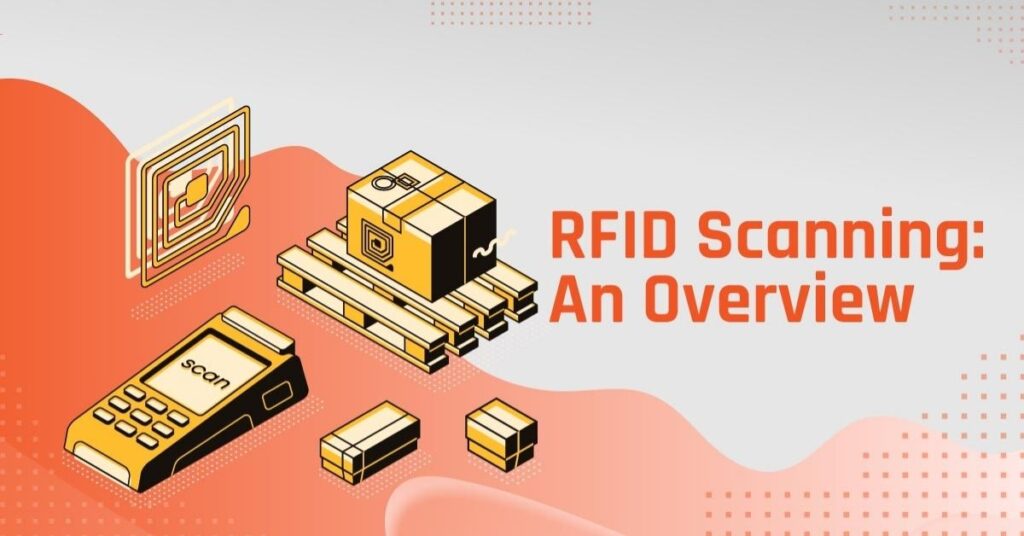
RFID stands for Radio Frequency Identification which uses radio frequency waves to transfer data wirelessly and without contact. Functionally, barcodes are different from RFID scanners because the scanner needs a line of sight to the barcodes. RFID tags & scanners do not need a line of sight—they communicate with the RFID tags on items without needing to see them individually. An RFID tag ensures a manufacturer can track every single part it uses in its goods, providing visibility over every moving part in the supply chain. One of the fastest-growing technologies in today’s warehouse is radio frequency identification (RFID). Increases in RFID adoption as well as advances in related technology have made it a much more affordable and cost-effective option for warehouses looking to better automate their inventory management and workflows. What is an RFID Scanner? How does it work? What is the difference between RFID Scanners & Barcode Scanners? The key difference between RFID scanners and barcode technology is that RFID scanners do not require line of sight to read tags. This means that RFID scanners can read tags from a distance, even if they are hidden or obscured. Barcode scanners, on the other hand, require direct line of sight to read barcodes. Advantages of RFID Superior to barcodes RFID tags are foremost preferred over barcodes because the chips are not subject to failure in scans or human error and the tags do not require the reader to be in the same line of sight. Resource-intensive manual scanning processes are eliminated with RFID & the inventory is scan-able and traceable, even as these materials rest, out of view, beneath other items.  Enhances warehouse efficiency RFID helps in automating and streamlining scanning processes that used to be manual. All materials labeled with an RFID tag transmit wireless data communication to the warehouse software and central database. The RFID-tagged items automatically track and update arrival and departure events, with just about anything in between.  Reduced human errors RFID essentially eliminates the potential for human error because information transfers remotely and automatically, warehouse items are less prone to fall through the cracks. There are no missed scans attributable to human error or barcode reader malfunctions. Better inventory control and accuracy By being able to capture inventory data and locations automatically and accurately, RFID can know exactly what products or materials are in stock and how many are needed to maintain and replenish. Flexibility & durability RFID tags are generally placed as stickers, which can be applied or removed from any object either wood, plastic or metal and offer the freedom to be placed on any point since these tags do not necessarily have to come in direct contact with the scanner and can be easily detected from a distance. RFID tags are quite durable, encrypt able, non-vulnerable to harsh weather conditions or tampering.  Disadvantages of RFID Scanning single vs multiple items If a pallet contains multiple boxes of different shapes and sizes, capturing data needs to happen at all angles to ensure every item is scanned. To use RFID effectively in a warehouse or loading dock environment, RFID blocks are used to form barriers between the readers, so that the same items are not scanned multiple times.  Material limitations RFID tags and labels are very specific to the type of material and size of the assets. For example, metal will deactivate the RFID antenna and the tag will not transmit at all. Liquid products can also affect the reliability of the signal.  Cost Comparison A typical barcode label costs a few cents each, while an RFID tag can run from one dollar upwards of 30 dollars depending on the type of tag. RFID readers are also about ten times more expensive than barcode scanners. In addition to the cost of the tags and readers, RFID implementation is significantly more expensive and complex than a barcode. Types of RFID Low Frequency Operating under 134.2 KHz, the low frequency range requires the tag to be in close contact with an RFID reader in order to transmit data. High Frequency Operating around 13.56 MHz, HF RFID tags have a read range of approximately one to three feet at the most Ultra High Frequency Operating between 800-900 MHz and higher, UHF RFID is typically used in large warehouses and distribution centers that need to track and identify multiple items at once Applications of RFID Low Frequency High Frequency Ultra High Frequency

Blogs

Will Warehouses be operated by AI agents in future? Which jobs are at risk?

Will Warehouses Be Operated by AI Agents in the Future? In the wake of the AI revolution, warehouses — the backbone of supply chains — are standing on the edge of a monumental shift. From barcode scanners to robotics, we’ve already seen technology reshape warehouse operations. But the next leap? AI agents — intelligent systems capable of reasoning, learning, making decisions, and autonomously coordinating complex tasks. The big question is: Will warehouses eventually be run by AI agents? If so, what does that mean for jobs, processes, and systems as we know them? Let’s unpack this vision of the future. What Are AI Agents? AI agents go beyond traditional automation. These are systems that can interpret data and environments in real time, make decisions and take action independently, learn and improve with experience, and coordinate with other agents or human teams. Think of them as virtual warehouse managers, supervisors, or floor operators who never sleep, constantly optimize, and learn from every task. The Inevitable Evolution: Why AI Agents Make Sense Warehouses are under pressure like never before — faster delivery promises, soaring SKUs, tight labor markets, and customer expectations for perfect accuracy. AI agents can offer transformative benefits: In short, AI agents bring proactive intelligence to every edge of the warehouse — from receiving docks to shipping bays. Which Jobs Are at Risk? While the term “job loss” often sparks fear, the story is more nuanced. Here’s a breakdown of how different roles may evolve: How Far Away Is This Future? Some aspects of AI-driven warehousing are already here: robotics integrated with WMS, predictive analytics for demand forecasting, and vision-based AI for defect detection. But fully autonomous warehouses operated by AI agents — from inbound to outbound — will likely take 10–15 years to become mainstream, depending on the complexity of operations, investment appetite, and technological maturity. Adoption will likely follow a hybrid approach first: human-AI collaboration zones, gradually shifting to AI-first models in certain areas like micro-fulfillment centers or returns hubs. What Needs to Change? Conclusion: AI Agents Are Coming — But You’re Still in Control The rise of AI agents in warehousing isn’t about replacing humans — it’s about reimagining how humans and intelligent systems work together. Businesses that embrace this shift early, invest in AI-aligned training, and adopt flexible systems will gain a competitive edge. In the not-so-distant future, your warehouse could be a place where AI agents dynamically orchestrate operations, while your people focus on creativity, strategy, and customer delight. It’s not science fiction — it’s just the next evolution in supply chain intelligence. Read More Read SCM News

Blogs

Drones in warehouse – Possibilities and Limitations

How Drones Can Enhance Warehouse Operations and Their Limitations Drones are increasingly being adopted in warehouse operations to improve efficiency, accuracy, and safety. Equipped with cameras, RFID scanners, and AI-based image processing, drones can automate inventory management, enhance security, and optimize space utilization. However, while they offer significant advantages, drones also come with inherent limitations that restrict their usability in certain scenarios. Use Cases of Drones in Warehouse Limitations of Drones in Warehouse Best-Suited Warehousing Environments for Drones Conclusion Drones provide immense potential for warehouse automation by improving accuracy, safety, and operational speed. However, their effectiveness is dependent on environmental factors, data processing capabilities, and integration with warehouse management systems. While they excel in stock verification and surveillance, their limitations in box counting and handling complex warehouse layouts mean that they complement rather than replace traditional inventory methods. Businesses should evaluate the suitability of drone technology based on their specific warehousing needs to maximize its benefits. Read More

Blogs

Feasibility of Using Drones in Warehouses

Do Drones have a Future in Warehouses? The logistics and supply chain industries are undergoing a technological transformation, with warehouses at the forefront of this change. There is much talk about usage of drones in warehouse operations. While there are several use cases that can be imagined for solving using drones, the challenges and limitations of the technology and the use case determine the feasibility. Here is a short summary of use cases, benefits, challenges and outlook on feasibility Use Case Benefit Challenge Feasibility Inventory Scanning Faster and more accurate stock counting using RFID or barcode scanning. Line-of-Sight Limitation: Barcodes must be visible to the drone’s camera, which can be obstructed by packaging or other items.Limited battery life.Difficulty in scanning reflective or damaged barcodes. Medium Stock Audits Real-time auditing of inventory to ensure accuracy and reduce shrinkage. Requires seamless integration with WMS.Signal interference in warehouses with poor connectivity. Medium Item Location Tracking Quickly locate misplaced or hard-to-find inventory items. Requires precise indoor positioning systems.Error margins are high in cluttered or dynamic spaces. Low Infrastructure Inspection Inspect racks, shelving, and high ceilings without manual intervention. Limited camera resolution for detailed inspections.Risk of collisions in tight spaces. High Surveillance and Security Monitor unauthorized activity or potential hazards. Privacy concerns.Navigating crowded or dynamic environments during operations. Medium Picking and Packing Assistance Transport lightweight items between zones to reduce travel time for workers. Low payload capacity.Risk of damaging items or disrupting workflow. Low Emergency Response Deliver medical kits or extinguishers to accident spots quickly. Requires pre-defined emergency protocols and training for effective deployment. High Thermal Monitoring Detect temperature anomalies in cold storage or areas prone to overheating. Requires specialized thermal cameras.Limited use cases outside niche requirements. Medium Cycle Counting Perform periodic stock counts without halting operations. Line-of-Sight Limitation: Similar to inventory scanning, barcodes need clear visibility.Scalability issues for larger warehouses. Medium Intra-Warehouse Transport Transport documents, tools, or lightweight packages across zones. Payload limitations.Potential disruptions in worker-heavy zones. Low So, Are Drones Just a Dream? Not quite! While the adoption is slow, there are promising signs of progress: Inventory Management: Some warehouses are using drones for scanning inventory in hard-to-reach areas, reducing the need for manual labor. Real-Time Audits: Drones equipped with RFID and camera technologies can provide faster and more accurate stock audits. Last-Mile Delivery: Though not within warehouses, drones are revolutionizing the way we think about last-mile logistics. The Road Ahead To make drones a warehousing reality, we need: The idea of drones in warehousing might still be distant, but it’s not unattainable. With the right mix of innovation, regulation, and adoption, the buzz of drones in warehouses might one day become as common as the hum of forklifts. What do you think? Are drones the next big thing in warehousing, or just another tech buzzword waiting for its moment? Let’s discuss in the comments! Read More

Blogs

Warehousing Technology Trends – Last 25 years

Over the last two decades, the warehouse industry has experienced significant technological advancements, transforming the way logistics and supply chain operations are managed. Here are some of the top technological trends and progressions observed in the warehouse industry over the past 25 years: Warehouse Management Systems (WMS): 2000s: The widespread adoption of WMS marked the beginning of improved inventory control, order processing, and overall warehouse efficiency. RFID Technology: Early 2000s: RFID technology gained traction, enabling more accurate and automated tracking of inventory, and reducing manual efforts in data collection. Voice Picking Systems: Mid-2000s: Voice-directed picking systems were introduced, enhancing order fulfillment accuracy and speeding up the picking process by providing hands-free guidance to warehouse workers. Automated Guided Vehicles (AGVs): Mid-2000s: AGVs started to be implemented for material handling and movement within warehouses, reducing the need for manual labor in certain repetitive tasks. E-commerce Integration: 2010s: The rise of e-commerce led to the integration of warehouse systems with online platforms, necessitating more sophisticated order fulfillment processes and real-time inventory updates. Advanced Robotics: 2010s: The adoption of robotics, including autonomous mobile robots (AMRs), improved efficiency in material handling, picking, and packing processes, especially in large-scale warehouses. Data Analytics and Big Data: 2010s: The use of data analytics and big data became more prevalent, providing warehouses with valuable insights for optimizing operations, demand forecasting, and strategic decision-making. Internet of Things (IoT): 2010s: IoT technologies were integrated into warehouses, allowing real-time monitoring of equipment, assets, and environmental conditions for improved visibility and control. Augmented Reality (AR) and Virtual Reality (VR): 2010s: AR and VR applications were introduced for training, order-picking guidance, and enhancing overall warehouse worker productivity. Cloud based Warehouse Management Solutions – WMS SaaS: 2010s: Cloud-based solutions gained popularity, offering scalability, flexibility, and accessibility for warehouse management systems and data storage. Drones for Inventory Management: 2010s: Drones were explored for inventory management purposes, conducting aerial scans for stocktaking and providing quick insights into warehouse layouts. Blockchain for Supply Chain Transparency: 2010s: Blockchain technology started to be considered for enhancing supply chain transparency, and traceability, and reducing fraud in warehouse operations. Machine Learning and Artificial Intelligence (AI): 2010s: Blockchain technology started to be considered for enhancing supply chain transparency, and traceability, and reducing fraud in warehouse operations. Edge Computing: 2010s: Edge computing solutions emerged, allowing data processing closer to the source, leading to reduced latency and enhanced real-time decision-making in warehouses. Smart Warehousing with Industry 4.0 Concepts: 2010s: Warehouses began embracing Industry 4.0 concepts, incorporating smart technologies for interconnected and automated systems, leading to enhanced efficiency and responsiveness. Sustainable Warehouse Practices: 2020s: Implementation of sustainable and eco-friendly warehouse practices, including energy-efficient technologies and green logistics solutions. GPT and LLMs 2020s: Using GPT and LLMs to solve warehousing use cases using Artificial Intelligence. Summary While these trends are indicative of the technological capabilities that exist, the adoption of most of these trends is abysmally low. Only few companies, largely ecommerce companies push the boundaries of innovation by leveraging technology. It is good to be aware of the possibilities that exist, however, it is important to evaluate the current state of operations and chalk out of progressive roadmap for incremental adoption and deployment.  Read more: How is dark store fulfillment different from regular E-commerce fulfillment

Pyrops® WMS is a warehouse management software designed, developed, and implemented by Precision Pyramid Private Limited.

For more info visit: www.precisionpyramid.com

India Head Office

A-1, Forest Lane, Near Ghitorni Metro Station, MG Road, Sultanpur, New Delhi – 110030

Nepal Corporate Office

Precision Pyramid Nepal Private Limited 6th Floor, Radha Bhawan, Tripureshwar, Kathmandu, Nepal

Contacts

Follow us

Scroll to Top