Warehouse Operations Simplified

Warehouse management

Mistakes in Inbound Operations within WMS System
Blogs

Top Mistakes in Inbound Operations within Warehouse Management Systems

What is a WMS System? A Warehouse Management System (WMS) is a software application designed to support and optimize warehouse or distribution center management and operations. It plays a crucial role in efficiently managing the storage, movement, and tracking of inventory within a warehouse. The primary goal of a WMS software is to streamline warehouse processes, increase accuracy, and enhance overall productivity. Inbound Warehouse Management System Functions The operation and functionality of a Warehousing Management System (WMS) vary depending on the specific features it incorporates and the functions adopted by a particular distribution operation. Given the multitude of WMS systems available—numbering in the hundreds—and the diverse array of user warehouses, there are numerous permutations of functions. Nevertheless, fundamental functionalities are consistent across all warehouse management system platforms, aligning with the core operations of any well-organized warehouse. The answer to how a software for warehouse management operates relies on the integrated features with warehouse management software and functions specific to each system, but it invariably adheres to the foundational principles essential for an effective warehouse management system. WMS Implementation For Multi-warehouse Operations WMS implementation for multi-warehouse operations is a strategic move for boosting efficiency and coordination throughout the supply chain. This robust WMS streamlines operations by configuring each warehouse’s unique needs, ensuring seamless integration. WMS software provides centralized control and real-time visibility, improving inventory management, order fulfillment, and resource optimization. Standardized processes and data consistency reduce errors, enhancing overall accuracy. The result is greater control, visibility, and operational efficiency, leading to improved customer satisfaction and a competitive edge in the market. Inbound Receiving Process in WMS System The inbound receiving process in a Warehouse Management System (WMS) is a critical component of efficient warehouse operations. It involves the steps taken when goods or products arrive at the warehouse, from their initial arrival to their placement within the storage facility. By streamlining the inbound receiving process, WMS systems contribute to increased accuracy, reduced errors, and overall efficiency in warehouse operations. The real-time visibility and automation provided by warehousing management systems significantly enhance the management of incoming inventory. Here are some of the top mistakes in inbound operations in warehouse management system: Poor Communication With Suppliers If there is poor communication with suppliers, it can result in incorrect products, damaged goods, or late deliveries. This can lead to delays in order fulfillment and increased labor costs. Failure to Inspect Products If warehouse staff fails to inspect products upon receipt, it can result in damaged, defective, or incorrect items being stored in the warehouse. This can lead to a reduction in product quality and customer satisfaction. Inaccurate Data Entry Inaccurate data entry can lead to inventory discrepancies and errors in order fulfillment. Staff should ensure that they enter data accurately and update the inventory system promptly. Lack of Standard Operating Procedures A lack of standard operating procedures can lead to inconsistent and inefficient receiving operations. Staff should follow a set of standardized procedures to ensure that the process is streamlined and efficient. Overlooking Safety Concerns Overlooking safety concerns during receiving can lead to accidents or injuries to staff or products. Staff should follow safety protocols when handling products or equipment to avoid injuries or damage. Insufficient Staff Training If staff members are not adequately trained on the receiving process, they may make mistakes due to a lack of knowledge or experience. Training should include proper receiving procedures, inspection guidelines, and product knowledge. Overlooking Safety Concerns Overlooking safety concerns during receiving can lead to accidents or injuries to staff or products. Staff should follow safety protocols when handling products or equipment to avoid injuries or damage. Managing Inbound Operations with WMS Software WMS software, streamlines inbound operations, offering advanced tools for efficient workflows. It simplifies pre-arrival planning, coordination of shipments, and tasks like unloading and inspection. Real-time visibility and intelligent storage assignment ensure quick and precise placement of goods. Warehouse management system software automates and enhances inbound operations, fostering accurate inventory records and heightened efficiency. Whether through timely notifications or insightful analytics, WMS software is an indispensable asset for optimizing inbound processes in any warehouse setting. Overlooking Safety Concerns Read More: Streamlined WMS Implementation for Multi-Warehouse Operations in 3PL


Blogs

Top Mistakes in Warehouse Outbound Process

What is a warehouse management system? Warehouse management involves the systematic planning, organizing, and controlling of various aspects within a warehouse to ensure efficient and effective operations. This includes overseeing the receipt, storage, and retrieval of goods, as well as the optimization of space and resources. Warehouse management aims to streamline processes, enhance accuracy, minimize costs, and improve overall productivity. Key components of warehouse management include inventory control, order fulfillment, picking and packing processes, shipping, receiving, and the utilization of technology such as warehouse management systems (WMS) to track and manage inventory in real-time. Effective warehouse management is crucial for businesses to meet customer demands, reduce lead times, and operate in a cost-effective manner. It plays a vital role in the supply chain by ensuring that products are stored and moved efficiently from manufacturers to distributors and ultimately to end customers. What are warehouse outbound operations? Outbound operations in a warehouse involve picking and packing products for shipment to customers. Warehouse outbound operations refer to the complete journey of goods from the moment they leave storage in a warehouse until they reach their final destination, typically outside the warehouse walls. This encompasses a range of activities and processes, aiming for accurate, efficient, and timely delivery of products to customers or other designated locations. Activities involved in outbound operations in warehouse Outbound warehousing activities encompass the processes involved in getting your products from storage shelves to their final destination, be it a customer’s doorstep, a retail store, or another distribution center. It’s the final stage in the supply chain journey, ensuring smooth and efficient delivery to fulfill customer orders. Here’s a breakdown of the key outbound warehousing activities: Order Processing: Order Receipt and Verification: Orders received from various channels like online platforms, phone calls, or emails are entered into the Warehouse Management System (WMS) for accuracy and inventory checks. Order Fulfillment Planning: Based on order details, inventory availability, and shipping preferences, the WMS plans the optimal picking and packing strategy. This might involve batching orders for specific regions or prioritizing urgent deliveries. Picking and Packing: Picking: Warehouse personnel locate and retrieve ordered items from their designated storage locations. Accuracy is crucial to avoid errors and delays. Different picking methods like zone picking or batch picking might be employed depending on warehouse layout and order volume. Packing and Labeling: Picked items are carefully packed into secure and appropriate packaging, considering item size, fragility, and shipping distance. Labels with accurate recipient information and shipment tracking codes are affixed to ensure proper delivery. Shipping and Transportation: Consolidation and Routing: Orders might be consolidated for efficient shipping, considering factors like destination, weight, and carrier preferences. This optimizes transportation costs and reduces the number of individual shipments. Shipment Preparation: Documentation such as invoices, packing slips, and customs declarations are prepared for each shipment. This ensures smooth passage through customs checkpoints and accurate delivery to the recipient. Dispatch and Tracking: Orders are dispatched to chosen shipping carriers and assigned tracking numbers for real-time updates on their journey. This allows for proactive problem-solving and customer communication in case of any delays or disruptions. Returns and After-sales: Returns Processing: Returned items are received, inspected, and processed according to company policy. This might involve restocking undamaged items, issuing refunds, or handling warranty claims. Inventory Management: Returned items impact inventory levels. They might need to be restocked, quarantined for quality control, or disposed of properly depending on their condition. Here are some of the top mistakes in outbound operations in warehouses: Picking errors: Picking errors can result in incorrect products being shipped to customers. This can lead to customer dissatisfaction and increased shipping costs if the incorrect items need to be returned or replaced. Poor packaging: Poor packaging can result in damaged products during shipping. This can lead to customer complaints, returns, and increased costs. Inaccurate order processing: Inaccurate order processing can lead to incorrect product quantities or shipping addresses. This can lead to delays in order fulfillment and increased shipping costs. Ignoring customer requirements: If warehouse staff ignores customer requirements such as special packaging or shipping instructions, it can lead to customer dissatisfaction and potential loss of business. Not prioritizing urgent orders: Not prioritizing urgent orders can lead to delays in order fulfillment and reduced customer satisfaction. Warehouse staff should prioritize urgent orders and ensure that they are shipped promptly. Lack of quality control: A lack of quality control can lead to errors in the picking and packing process. Staff should follow quality control procedures to ensure that products are packed correctly and meet customer requirements Inefficient shipping methods: Inefficient shipping methods can lead to increased shipping costs and longer delivery times. Staff should use efficient shipping methods and carriers to reduce costs and improve customer satisfaction. By avoiding these mistakes, you can ensure that your outbound operations are efficient and accurate. Regular training, process standardization, and using technology solutions like barcode scanning or automated picking systems can help reduce errors and improve your warehouse operations. Read more: Pickers who walk vs Walkers who pick! What do you have in your warehouse?

Top Mistakes in the Putaway Process in Warehouse | Pyrops
Blogs

Top Mistakes in Putaway Process in Warehouse

Warehouse managers’ goal is focused on fulfilling customer orders quickly and safely. This can be achieved by using warehouse space and equipment strategically and efficiently. Warehouse management software can optimize packing and picking processes, but warehouse putaway is another important part of supply chain logistics that should not be neglected. By optimizing the warehouse putaway process, warehouse managers can effectively utilize storage space and streamline the flow of goods from manufacturers to customers. This optimization can be achieved through efficient warehouse management techniques and the implementation of a robust WMS putaway system. What is putaway in warehouse management? Warehouse put away process is the process of moving goods from the receiving area to the storage area. After goods are received at a warehouse, they must be inspected, sorted, and stored properly for later retrieval and order fulfillment. Warehouse putaway involves storing products inside the warehouse on shelves, containers, bins, pallets, and other assigned places. The warehouse put away process begins with placing a purchase order with a vendor. After the vendor delivers the products, they must be stored efficiently to make the picking process easier and to improve visibility into inventory. The goal of the WMS putaway process is to make warehouse operations more efficient, error-free, and fast. By storing goods in a way that reduces travel distance for warehouse workers and maximizes warehouse space through warehouse optimization, putaway helps warehouses to fulfill orders quickly and accurately. Failure to plan ahead If warehouse staff fail to plan for putaway, it can result in a haphazard and inefficient process. This can lead to misplaced items, low-density storage, and a waste of space. Poor organization A lack of organization can make it challenging to put away products properly. Warehouse staff should have a clear understanding of where each product belongs, and storage areas should be appropriately labeled. Not verifying the product If warehouse staff does not verify the product before putaway, it can lead to misplacements, inventory discrepancies, and ultimately, errors in order fulfillment. Poor communication If there is poor communication between the receiving and putaway departments, it can result in products being put away in the wrong locations, leading to delays in order fulfillment and increased labor costs. Failing to rotate stock Failing to rotate stock can lead to expired or damaged products and can result in increased costs due to waste. Warehouse staff should adhere to a first-in, first-out (FIFO) system to ensure that older products are used first. Inadequate training If staff members are not adequately trained on the putaway process, they may make mistakes due to a lack of knowledge or experience. Training should include proper putaway procedures, location labeling, and product knowledge. By avoiding these mistakes, you can ensure that your putaway operations are efficient and accurate. Regular training, process standardization, and using technology solutions like RFID or barcode scanning can help reduce putaway errors and improve your warehouse operations. Benefits Of Warehouse Putaway Process A well-executed warehouse putaway process offers a multitude of benefits that can significantly enhance warehouse operations and overall business performance. Here are some of the key advantages of implementing an efficient putaway process in warehouse: 1 . Optimized Warehouse Layout Design An effective putaway process is the cornerstone of efficient warehouse operations. By carefully planning your putaway workflow, you can maximize the utilization of your existing warehouse layout and streamline inventory management. 2.Streamlined Picking Operations Implementing a robust putaway process in warehouse management emerges as a game-changer in addressing this issue. By strategically storing products in designated locations, pickers can drastically reduce their search time and expedite order fulfillment. An efficient putaway process not only enhances productivity and cost-effectiveness but also contributes to a smoother customer experience. 3.Inventory Management Accuracy Implementing an efficient wms putaway process can significantly reduce the risk of inventory errors and associated costs. By strategically storing products in designated locations and maintaining accurate inventory records, businesses can ensure that the right items are picked and shipped to customers. Conclusion Putaway in the warehouse management system plays a pivotal role in ensuring seamless warehouse operations. It’s the foundation upon which inventory management and order fulfillment are built. By understanding the locations of stored products and leveraging a modern warehouse management system (WMS), businesses can elevate their putaway strategy to new heights of efficiency and productivity. Read More: Top 5 Mistakes to Avoid in Inventory Management

Blogs

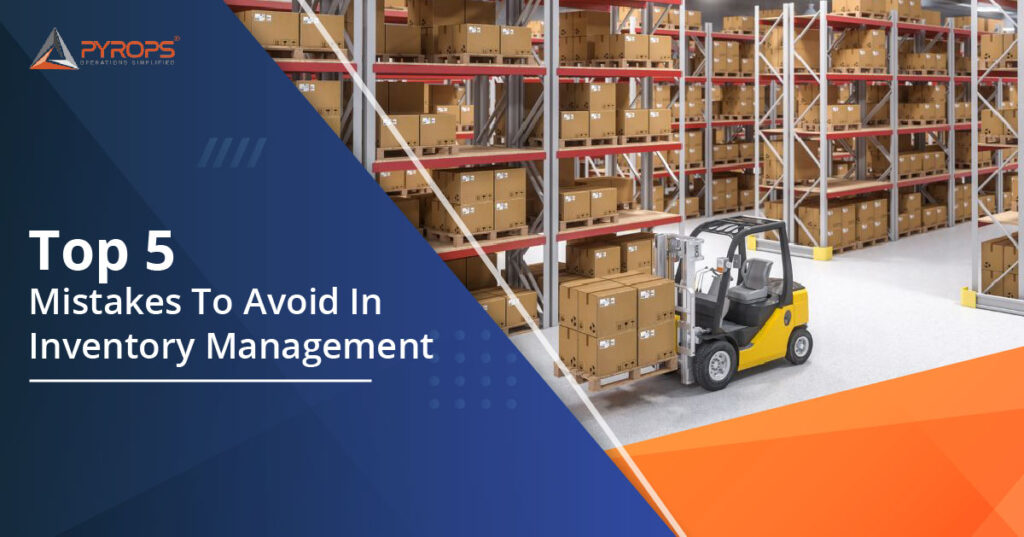
Top 5 Mistakes to Avoid in Inventory Management

Let’s face it, managing inventory is no easy feat. It’s like trying to juggle a bunch of boxes while riding a unicycle on a tightrope. One wrong move and everything comes crashing down. So, to help you avoid the inevitable disaster that is inventory mismanagement, we’ve compiled a list of the top 5 mistakes to avoid in inventory management. Trust us, you don’t want to make these mistakes. Mistake 1: Not Knowing What You Have This is like going to the grocery store without a list. You’re going to end up with a bunch of stuff you don’t need and forget the one thing you actually came for. The same goes for inventory management. If you don’t know what you have, you’re going to end up ordering too much of the wrong thing and not enough of the right thing. And then you’ll be stuck with a bunch of useless items taking up space in your warehouse. So, do yourself a favor and keep track of what you have. Mistake 2: Trusting Your Memory Do you remember that one time you thought you had more inventory than you actually did? Yeah, that’s because you trusted your memory. Newsflash, your memory is not infallible. You need to have a system in place to keep track of your inventory. Trust us, it’s much easier than trying to remember everything yourself. Mistake 3: Not Labeling Your Inventory This is like trying to find a needle in a haystack. If you don’t label your inventory, you’re going to waste a lot of time trying to find the right box. And let’s be honest, you don’t have time for that. Label your inventory, and save yourself the headache. Mistake 4: Not Ordering Enough This is like trying to make a cake with half the ingredients. It’s not going to turn out right. If you don’t order enough inventory, you’re going to run out of stock and have to turn away customers. And no one likes a disappointed customer. So, make sure you order enough to keep up with demand. Mistake 5: Not Ordering at the Right Time This is like showing up to a party too early or too late. You don’t want to be that person. If you don’t order at the right time, you’re going to end up with inventory sitting around for too long, or worse, running out of stock. So, make sure you order at the right time to keep your inventory moving. In conclusion, inventory management is no joke. But with a little bit of planning and organization, you can avoid these top 5 mistakes to avoid in inventory management and keep your inventory under control. Read More: Streamlined WMS Implementation for Multi-Warehouse Operations in 3PL
Blogs

3PL Warehouse: Streamlined WMS Implementation for Multi-Warehouse Operations

Effective warehouse management is vital for the success of 3PL and e-commerce businesses. To meet growing customer demands and navigate the complexities of managing multiple warehouses, implementing a robust Warehouse Management System (WMS) is crucial. A centralized WMS across various warehouse locations can optimize operations, enhance inventory accuracy, streamline order fulfillment, and deliver overall efficiency gains. However, implementing a WMS in a multi-warehouse environment requires careful planning and execution.  In this blog, we explore challenges faced by warehouse managers, highlight the benefits of a powerful WMS, discuss key features for selection, and provide insights and strategies for successful implementation. Whether you’re a 3PL provider or a business with a vast network of warehouses, this blog offers the knowledge needed to streamline operations and achieve remarkable efficiency through WMS implementation. Need of WMS System in 3PL Warehouse Management Running a 3PL operation without a reliable Warehouse Management System (WMS) is akin to sailing an ocean without a compass—an extremely challenging endeavor. WMS is indispensable for 3PL operations, providing order to the complexity of handling diverse inventory for multiple clients. It improves inventory accuracy, minimizes order fulfillment errors, and accelerates delivery times—critical factors for sustaining client satisfaction and staying competitive in the logistics industry. What is a 3PL Warehouse Management system? A 3PL Warehouse Management System (WMS) is a software solution designed to efficiently manage and optimize the operations of third-party logistics providers (3PLs) responsible for handling and storing inventory on behalf of multiple clients. 3PL WMS system streamlines various warehouse processes, including inventory tracking, order fulfillment, and shipment management. By providing real-time visibility into inventory levels, improving accuracy, and enhancing overall operational efficiency, a 3PL WMS software contributes to effective logistics management and client satisfaction. Challenges faced in Multi warehouses Juggling multiple warehouse operations presents a slew of challenges that businesses must face head-on. These challenges cover a wide range of critical areas, each of which necessitates careful attention and strategic solutions. Let’s look at the main challenges that come with running multiple warehouses: Inventory Visibility: Lack of real-time visibility into inventory levels across all warehouses can lead to stockouts, overselling, and poor customer satisfaction. Order Fulfillment Efficiency: Coordinating order fulfillment across multiple warehouses can be complicated, resulting in delays, errors, and increased costs. Scalability: As the number of warehouses and inventory volumes grows, managing operations manually becomes increasingly challenging, leading to inefficiencies and operational bottlenecks. Data Integration: Consolidating data from multiple warehouses and ensuring accurate and up-to-date information can be time-consuming and prone to errors. Resource Utilization: Optimizing resource utilization across multiple warehouses is complex, across labor, equipment, and space. Inefficient resource allocation can lead to underutilization or overutilization, impacting operational costs and productivity. Vendor and Client Collaboration: Coordinating with vendors and clients across multiple warehouses requires effective communication and collaboration. Ensuring timely and accurate information exchange, managing vendor relationships, and meeting client-specific requirements can be challenging without streamlined processes and tools. How 3PL WMS software Helps solve these challenges Unlocking the potential of an efficient Warehouse Management System (WMS) can be a game changer for businesses with multiple warehouses. This powerful software solution is designed specifically to streamline and optimize various aspects of warehouse operations. Organizations can effectively address the aforementioned challenges and achieve significant improvements in: Centralizing Inventory: An Enterprise WMS provides real-time centralized visibility into inventory levels across all warehouses, enabling businesses to make data-driven decisions, avoid stockouts, and optimize stock allocation. Order Consolidation and Routing: A WMS streamlines order fulfillment by consolidating orders from various warehouses and determining the most efficient routing, minimizing shipping costs and delivery times. Scalability and Flexibility: WMS systems are scalable and can accommodate the growth of a multi-warehouse network. They can handle increased inventory volumes and adapt to changing business requirements. Data Integration and Accuracy: A WMS integrates with various systems, such as Enterprise Resource Planning (ERP) and Transportation Management Systems (TMS), ensuring accurate and synchronized data across all warehouses. Key Features of WMS for 3PL warehouse system A robust 3PL Warehouse management software should include essential features to ensure seamless operations and efficient inventory management. These features have been meticulously designed to provide businesses with the tools they require to thrive in the ever-changing world of warehousing. The following are key features of a high-quality WMS software: Multiple Units of Measure: The software should be able to handle products measured in different units, such as weight, volume, or quantity. It should be able to seamlessly convert between other units, allowing for accurate inventory tracking and order fulfillment. Vendor Management: In a multi-vendor warehouse, effective vendor management capabilities are critical. The software should allow for streamlined vendor onboarding, as well as easy communication, performance tracking, and collaboration. This feature improves vendor relations and ensures smooth coordination. Inventory Tracking and Management: In a multi-vendor warehouse environment, accurate and real-time inventory tracking is critical. The software should include comprehensive inventory management features that allow for accurate tracking, monitoring, and control of stock levels in various units of measurement. It should support automated replenishment and provide real-time inventory movement updates across vendors. Order Fulfillment: The software should have strong order fulfillment capabilities tailored to multi-vendor operations. It should make order management, picking, packing, and shipping processes easier by considering multiple measurement units. This feature allows for the efficient consolidation of orders, the optimization of picking routes, and the generation of accurate shipping labels and documentation. Integration Capabilities: Seamless integration with other systems is crucial in a multi-client warehouse. The software should have the ability to integrate with e-commerce platforms, ERP systems, transportation management systems, and other relevant software. This integration ensures the smooth flow of data and eliminates manual data entry or reconciliation efforts, especially when dealing with different units of measure. Reporting and Analytics: Comprehensive reporting and analytics features are vital for monitoring enterprise resource planning and making data-driven decisions. The software should provide customizable reports, dashboards, and analytics tools that offer insights into key metrics related to inventory turnover, order accuracy, vendor performance, and fulfillment cycle times, considering the multiple units

Blogs

Challenges of Integrating Disparate Supply Chain Systems

In recent years, many companies have turned to centralized control towers to optimize their supply chain operations. A control tower provides a single view of the entire supply chain, enabling real-time monitoring, analysis, and decision-making. This can help companies reduce costs, increase efficiency, and improve customer satisfaction. However, achieving a centralized control tower is not without its challenges. Here are the four major challenges companies face when integrating disparate supply chain systems: Challenge 1: Incompatible Systems One of the biggest challenges in integrating disparate supply chain systems is compatibility. Not all systems are designed to work together, and some systems may use different data formats, protocols, or languages. This incompatibility can lead to errors, delays, and data loss, making it difficult to achieve a centralized control tower. Challenge 2: Data Quality Another challenge in integrating disparate supply chain systems is ensuring data quality. The different systems may use different data formats, have different levels of data granularity, or use different data definitions. This can lead to inconsistencies, inaccuracies, and incomplete data, which can compromise the quality of the centralized control tower. Challenge 3: System Complexity Integrating disparate supply chain systems can be a complex process. The different systems may have different configurations, versions, and customization, which can make it difficult to connect them. Moreover, the integration process may require changes to existing systems, which can be time-consuming and disruptive. Challenge 4: Security and Compliance Integrating disparate supply chain systems can also pose security and compliance risks. The different systems may have different security protocols, access controls, and compliance requirements. Integrating these systems can create vulnerabilities, expose sensitive data, and compromise regulatory compliance. Overcoming The Challenges of Integrating Disparate Supply Chain Systems To overcome the challenges of integrating disparate supply chain systems, companies must invest in integration technologies, data governance, change management, and security controls. Integration technologies can help bridge the gap between incompatible systems, while data governance can ensure data quality and consistency. Change management can help minimize disruptions and ensure that employees are trained and prepared for the new system, while security controls can help mitigate security and compliance risks. The Benefits of a Centralized Control Tower Despite the challenges of integration, a centralized control tower can provide many benefits to companies. By providing real-time visibility, analytics, and decision-making capabilities, companies can optimize their supply chain operations and achieve greater efficiency and customer satisfaction. A centralized control tower can also help companies respond quickly to disruptions and make data-driven decisions that can improve their bottom line. In conclusion, integrating disparate supply chain systems is a complex and challenging task, but it is necessary to achieve a centralized control tower. The challenges of integration include incompatible systems, data quality, system complexity, and security and compliance. To overcome these challenges, companies must invest in integration technologies, data governance, change management, and security controls. By addressing these challenges, companies can create a centralized control tower that provides real-time visibility, analytics, and decision-making capabilities for their supply chain operations. Read More: Supply Chain 4.0

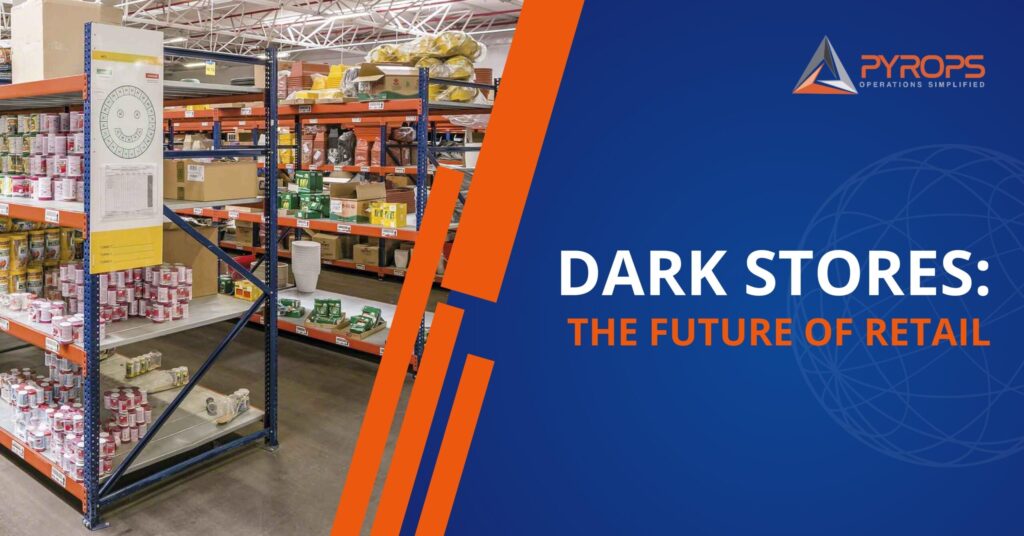
Dark Stores: The Future of Retail
Blogs

Dark Stores: The Future of Retail Warehouse Management System

Customers today seek immediate satisfaction when shopping, which is why a significant number prefer the in-person retail experience. The ability to locate desired items, complete a purchase, and leave with the product in hand is a major draw. However, the challenges posed by the pandemic have hindered the seamless provision of this type of shopping encounter. Consequently, numerous physical retailers, both small and large, have embraced a strategy known as “dark stores.” These establishments utilize their retail spaces to serve as warehouse management systems where a substantial inventory is stored and orders are fulfilled. To enhance customer options, they leverage ecommerce warehouse management systems and warehousing management software, enabling features such as swift delivery and same-day pickup. Dark stores play a pivotal role in streamlining the handling of online orders within physical distribution centers, whether or not these centers are accessible to customers. Nonetheless, they notably elevate different facets of the retail experience, offering optimal convenience through efficient delivery and pickup options, along with an extensive product selection, all facilitated by the best software for warehouse management systems. What are Dark Stores? Traditional retail stores that have been transformed into local fulfillment centers are known as dark store models. Grocery stores, clothing labels, and home goods retailers are among them. Their layouts are designed and optimized for retail fulfillment of online orders. Picking and packing of all the ordered items take place in the dark warehouse. The customer either ship or pick up the orders. This approach provides retailers with versatile options catering to both local and external customers, facilitated by an efficient retail warehouse management system. The COVID-19 outbreak has had a major influence on the retail industry. To allow customers to purchase from a brick-and-mortar retail store without visiting a store, businesses are turning to dark stores as a future of stores.They provide the space in the dark warehouse needed to fulfill orders for shipping or prepare them for pickup without requiring customers to enter a crowded store. Why Are Dark Stores Becoming More Popular in the FMCG Industry? The FMCG industry faces a lot of unique concerns such as perishability and the need for a large number of SKUs. Managing SKUs and tracking perishability in a traditional store can be a time-consuming task. Dark stores meaning, on the other hand, focus primarily on click-and-collect functionality. They prioritize ecommerce warehouse management and employ FMCG warehouse management systems, enabling more efficient control over SKUs and addressing the unique concerns of perishable goods. Dark stores are extremely efficient because they do not require a specific location or design for the shopping experience. They don’t need any space to display in-store advertisements. Furthermore, the dark store model can serve multiple online retailers at the same time. Dark grocery stores keep a large volume of goods in a smaller space. It facilitates easy picking and packing. Fulfillment of orders occurs in dark warehouses. It allows merchants to make the most of available space for easy picking. Instead of the customers, store pickers now walk the aisles to find the products required in the customer order. Benefits of using Dark Stores The benefits of utilizing dark stores extend beyond a mere trend, emphasizing the advantages of employing warehouse management systems. These  include the ability to serve local customers. And also to expand the customer reach at a lower cost. Here are a few reasons why the benefits of warehouse management systems make dark warehouses a lasting and impactful strategy. Stocking Space Customers are not permitted inside functional dark stores. So, their layout can be designed to improve storage and picking capabilities. Improving storage capacity ensures a wider product assortment. Faster picking ensures that orders are filled more quickly without sacrificing order accuracy. Stock Levels Dark store models are significantly smaller than typical warehouses. So, it is much easier to keep track of inventory levels. Many dark stores also have Warehouse Management Software. It allows them to keep track of stock levels in real-time. This software also assists retailers in determining if they have too much inventory (known as “deadstock”) or not enough. This can result in stockouts. You can ensure that you always have an ideal level of inventory by streamlining the inventory control process. Order efficiency Dark stores can handle a big volume of orders because they are customer-free zones. So, pickers can also easily walk aisles without having to dodge shoppers and their trolleys. The activity is significantly faster than an end customer doing the same because the pickers are working on confirmed orders. And, they are more familiar with the layout. Dark store warehouse efficiency can be increased by automating fulfilment activities with the right technology, such as Warehouse Management Software (WMS). Order consumption Consumers are more likely to become long-term, loyal customers after they become familiarised with your brand’s speedy, trustworthy, and accurate delivery of items. Dark stores can easily provide customers with more delivery options. This results in increased sales and customer lifetime value. Dark Store Order Fulfillment Models For all types of retailers, dark store fulfilment is a strategic and productive alternative. However, to be fully sustainable, it should offer a variety of delivery and pickup options.  Below are the three most typical delivery options for dark businesses. 1. Home delivery Home delivery has become more common, particularly among local shops. Customers will benefit from fast, convenient, and frictionless delivery, especially when it comes to essentials. However, home deliveries can also be made by starting an online store and shipping orders to clients who are located further away. 2. In-store pickup Many classic dark businesses have a designated pick-up space located near the front entrance. Customers won’t have to walk through the dark store to get their product this way. This provides flexibility and reduces delivery costs. 3. Curbside pickup Customers can quickly pick up orders with curbside pickup. It typically consists of designated parking areas where a retailer staff will bring out the order. So the customer does not have to get out of their

Blogs

The Rise of D2C Brands

  Retail in India is booming. The Indian retail business is expected to grow to $1 trillion by 2025, up from $750 billion in 2020. As the pandemic has accelerated the use of digital channels for shopping by Indian customers, direct-to-consumer (D2C) brands have grown tremendously. In direct-to-consumer marketing, corporates can create their products and sell them directly to consumers by eliminating other intermediaries. They can be e-commerce platforms, retail stores, or social media businesses. The purpose is to remove resellers and retail stores from the process before the final consumer. Why the D2C bandwagon? Profitability: By removing intermediaries, brands can lower distribution costs and have more control over profit margins. Also, it offers a better value proposition to consumers. Personalization: The brand retains control of the customer relationship, allowing it to manage the entire experience chain, from the website to the product delivery. Data Control: A high-quality customer connection necessitates real-time access to all data. To understand their customers’ preferences, patterns, trends, and demands must be identified. Fulfilment Technologies D2C brands have to invest significantly in the fulfilment experience to deliver an acceptable offering for the consumer, especially when the consumer is used to an Amazon / Flipkart kind of fulfilment experience. Their fulfilment is complex and predictability of the supply chain can be tricky unless the D2C brands invest in the right systems and processes. Thanks to technological advancements so these issues can be easily resolved. Order Management Systems When selling direct-to-consumer (D2C) products, a brand must invest in order management solutions. It offers benefits such as Maintain a centralised database of inventory spread across all locations Provide complete visibility of stock movement Allow for faster order processing by integrating all sales channels into a single platform. Implementation of Warehouse Management System (WMS) For smooth supply chain operations, a direct-to-consumer(D2C) business needs warehouse management software so that assists in Error-free barcode label driven and scan-based operations Optimize order picking & shipping for faster dispatches Provide real-time information on the inventory Return Management Solutions Returns are an integral part of e-commerce. Customers are more likely to shop with a retailer that offers a simple returns process. To increase productivity, D2C brands should invest in a return management solution that offers the following benefits: Create a return manifest to track shipments Quick return processing and capturing codes for further analysis Ensure quick re-listing for sales Warehouse management in D2C businesses A D2C business requires warehouse management software because it assists in acquiring goods and placing them on the appropriate shelf. They require WMS to enhance order picking & shipping and provide real-time inventory information as well. It can also be integrated with your existing ERP system. Here are a few tips for effectively managing your warehouse: Keep your warehouse organized An organized warehouse ensures smooth warehouse operations for your business. So, adhere to the following points to manage your warehouse: Place frequently selling items at an accessible spot Track products using barcodes and labels. Use a shelf system to make the most of your warehouse’s vertical space. Use the FIFO and FEFO methods. Stock level Maintaining product stock levels to ensure that you never run out of products. And, it should have the appropriate stock positions across multiple warehouses aligned with geographical demand and forecasting. You can also analyse sales of products based on seasons, months, and other parameters by marking out the minimum and maximum stock for each product in your warehouses. Forecasting & cycle analysis You should improve the forecasting and cycle analysis. The best benefit of improving product forecasting and performance cycle track is that there will never be a shortage or overflow of items. You’ll know when to restock and how much to reorder with smart data management. So, you can maintain optimal availability and inventory levels. Invest in warehouse technologies that automate and improve inventory management. It further improves the forecasting of product flow. Because of an effective warehouse management system, you can prepare for holiday seasons well ahead of time. Storage space By monitoring the process and looking for inefficiencies, you can improve the efficiency of your warehouse storage space. Meanwhile, ensure the maximum utilization of space. Warehouse optimization enhances accuracy, on-time delivery and the healthier bottom line. Pyrops WMS processes orders from all platforms in real-time. It allows inventory to be handled effectively and assures error-free & timely product deliveries. As a result, it provides a better customer experience and builds a solid relationship with customers.  

Best Practices For FMCG Warehouse
Blogs

Warehouse Management Best Practices For FMCG

What is a warehousing management system? A Warehouse Management System (WMS) solution plays a pivotal role in efficiently overseeing the reception, storage, and movement of materials within a warehouse, as well as facilitating their timely shipment to customers or other destinations. WMS software is instrumental in managing inventory control, optimizing order fulfillment processes, and streamlining material handling operations. Within the broader scope of the supply chain, a WMS System solution serves as a central hub for coordinating the inbound and outbound flow of goods. This encompasses the seamless coordination of goods from the manufacturing facility to the warehouse and ultimately to end customers. The WMS software also ensures the meticulous tracking and management of stored goods, emphasizing the safe and secure handling of materials within the warehouse environment. Best Practices For Warehouse Management Good warehouse practices require maintaining high quality and safety standards for goods in storage. This includes everything from receiving and storing raw materials to distributing finished products. In the FMCG industry, the competition is fierce. As a result of consumers’ high expectations, the focus remains on delivering products efficiently to the market. The availability of products at relevant channels and the best warehousing practices have become important competitive differentiators. Also, the FMCG industry has a minimal margin for error due to the reduction in product life cycles. Hence, it determines how to plan and execute supply chain management effectively. FMCG WAREHOUSE Improved warehousing and logistics solutions are major productivity drivers in the FMCG industry. Warehouse management can play an essential role in the integrated logistics strategy. They (warehouses) develop and maintain positive relationships with the supply chain partners. Simultaneously, warehouse management system software directly impacts customer service, brand sales, and marketing initiatives. A warehouse firmly manages the fluctuations in market supply and demand. A warehouse management software focuses on storing products whenever supply exceeds demand. Warehouses can speed up product delivery by offering additional price tagging, product packaging, or final assembly. As a result, the warehouse’s good practices serve as a link between the producer and the customer. Warehouses are specially designed spaces for storing and handling materials. FMCG warehousing operations increased ROI and reduced costs by improving their processes, picking stock more efficiently, and managing their locations better. They also need to keep their partners and customers happy to stay competitive. WMS software should be able to handle tasks like cross-docking, loading and unloading bays, using handheld devices, packing in bulk, and scheduling tasks. FMCG warehouse management teams need powerful and flexible WMS software to make their operations more efficient. The goal is to consistently improve service levels, both for internal and partner operations, while reducing operational costs and increasing revenue. FMCG warehousing operations increased ROI and reduced costs by improving their processes, picking stock more efficiently, and managing their locations better. They also need to keep their partners and customers happy to stay competitive. WMS software should be able to handle tasks like cross-docking, loading and unloading bays, using handheld devices, packing in bulk, and scheduling tasks. FMCG warehouse management teams need powerful and flexible WMS software to make their operations more efficient. The goal is to consistently improve service levels, both for internal and partner operations, while reducing operational costs and increasing revenue. CHALLENGES IN FMCG WAREHOUSE Optimizing FMCG warehouse design A company must optimize the warehouse storage spaces inside warehouses. In simple terms, a firm must use FMCG warehouse design for various purposes, such as inventory. Also, goods in areas must equip themselves with well-designed pick pathways for smooth operations. Stock Tracking & Accuracy If a company uses a WMS Software or an ERP system, then purchase order data availability becomes feasible. One must not compromise upon accuracy. Poor customer service results in less accuracy in the FMCG warehouse. Seamless Compatibility  All of the systems in a Retail Distribution Warehouse must operate smoothly to achieve maximum efficiency. It is essential to integrate the warehouse management system and ERP systems perfectly. Multiple Locations The demand for inventory tracking grows 10X when warehouses operate at multiple locations. Warehouse managers need real-time monitoring and reliable data to locate the position of inventory. For example, the manager can call and process it faster if the stock is yet to leave the warehouse. BEST PRACTICES FOR YOUR FMCG WAREHOUSING Here are the five best warehousing practices for FMCG  that can help in the FMCG’s warehouse growth. 1. FEFO One must consider various factors while establishing a First-Expiry-First-Out (FEFO) strategy in the warehouse. Improving the operations by using a FEFO put-away and pick process helps a company in the long run. Many FMCG customers choose to store their products in many locations with a variety of SKUs or inflow racks. Choose a WMS software that takes FEFO into account at the receiving and pick-up process. 2. Cross-docking It involves unloading a product from one truck and loading it directly into another. A company doesn’t require storing the product in the warehouse again as it directly gets loaded into another. A company saves valuable time and money by delivering the products on time and saving the cost for extra storage. As much as feasible, follow this approach to keep your operations smooth. 3. Wave replenishment Space on your level and equipment such as lifts have a lot more to do with wave replenishment than anything else. Your warehouse replenishment team may need to coordinate their efforts if there aren’t enough lifts available, especially for a given set of activities. This factor will help to prevent unnecessary traffic on the floor. 4. Visibility The consumer products industry must have complete insight into the supply chain. It helps the industry to benefit from thorough product traceability. A warehouse supplier allows you to locate your products right from inbound shipments to storage. It also gives the facility of warehouse picking, packing, and shipping. So that the needs of end customers are met. It becomes easier to plan more effectively and cut the cost once the needs are met. 5. Co-packing, labelling, kitting If

Pyrops® WMS is a warehouse management software designed, developed, and implemented by Precision Pyramid Private Limited.

For more info visit: www.precisionpyramid.com

India Head Office

A-1, Forest Lane, Near Ghitorni Metro Station, MG Road, Sultanpur, New Delhi – 110030

Nepal Corporate Office

Precision Pyramid Nepal Private Limited 6th Floor, Radha Bhawan, Tripureshwar, Kathmandu, Nepal

Contacts

Follow us

Scroll to Top