Warehouse Operations Simplified

Warehouse Operations

Quality Control In Warehouse
Knowledge Series

Quality Control In Warehouse

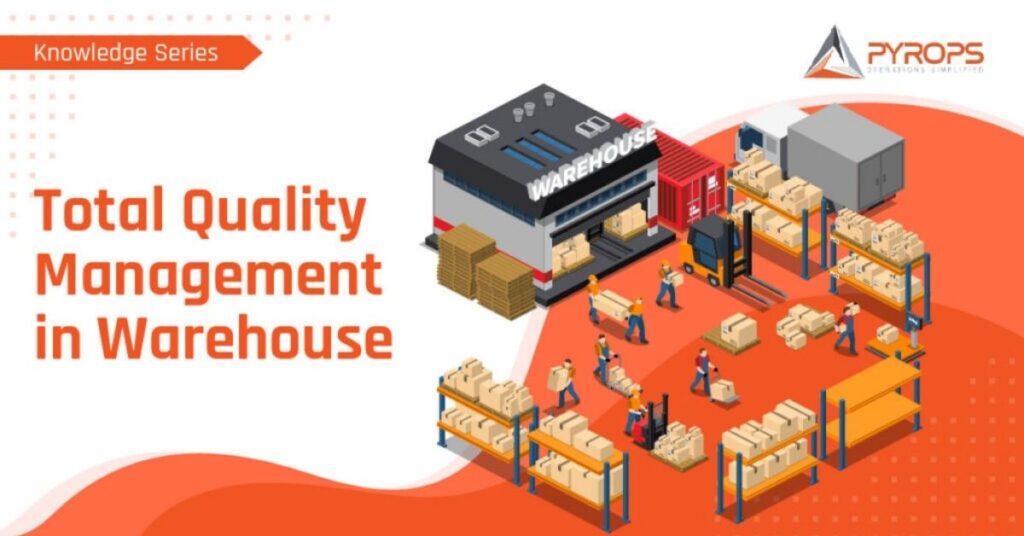
Quality control in warehouses is important to the success of an organization and its business. Focusing on the quality of each order, monitoring and adjusting protocols and processes based on key metrics for the proper packing and shipping of each order can improve the efficiency of operations. Keeping tabs on metrics such as how long it takes to pick, safely package, and correctly fill an order, to then load it properly before it ships out are all fundamental to improving product quality. What Is Quality Control In A Warehouse? In the dynamic world of warehouse operations, a warehouse quality checker plays a pivotal role in maintaining efficiency, minimizing errors, and safeguarding customer satisfaction. Warehouse quality control encompasses a comprehensive set of practices aimed at monitoring and evaluating the quality of warehouse operations and ensuring that all work adheres to established standards. Effective QC in warehouses extends beyond the confines of the warehouse walls, encompassing the entire process of receiving and dispatching goods. This includes meticulously inspecting incoming shipments to ensure that products meet the specified quality standards before they are stored or distributed. This level of vigilance helps protect your reputation and ensures that your customers, or your customers’ consumers if you are a third-party logistics (3PL) warehouse, receive only the highest quality goods. Quality control in warehouse management extends far beyond mere product inspection; it encompasses a holistic approach to optimizing warehouse operations and minimizing inefficiencies. By implementing rigorous quality control measures, businesses can identify and address potential bottlenecks, streamline processes, and reduce the likelihood of errors. This, in turn, leads to improved efficiency, reduced costs, and enhanced customer satisfaction. Importance of Quality Control In warehouse Quality in the warehouse operations is of paramount importance for ensuring that products are stored, handled, and shipped in a manner that maintains their quality and integrity. It plays a crucial role in safeguarding customer satisfaction, minimizing errors and losses, and optimizing warehouse operations. Enhancing Customer Satisfaction Effective quality control in warehouse management measures directly contributes to customer satisfaction by ensuring that products reach customers in a timely, undamaged, and defect-free condition. This, in turn, fosters customer loyalty, reduces the likelihood of returns and complaints, and enhances the overall perception of the brand. Minimizing Errors and Losses QC in the warehouse helps prevent costly errors and losses that can arise from damaged goods, incorrect shipments, or mishandling of products. By implementing rigorous quality control procedures, businesses can identify and address potential issues early on, reducing the risk of financial losses and reputational damage. Optimizing Warehouse Operations Warehouse quality management promotes efficiency and consistency within warehouse operations. By establishing clear quality standards and implementing effective control measures, businesses can streamline processes, reduce rework, and minimize downtime. This, in turn, leads to cost savings, improved productivity, and enhanced overall warehouse performance. Keeping tabs on metrics such as how long it takes to pick, safely package, and correctly fill an order, to then load it properly before it ships out are all fundamental to improving product quality. Total Quality Management (TQM) Total Quality Management (TQM) is a manufacturing philosophy, which focuses on improving quality across the operations, and producing higher quality products with few defects. Total quality management is a structured approach to overall organizational management. The focus of the process is to improve the quality of an organization’s outputs, including goods and services, through the continual improvement of internal practices.  Total warehouse quality assurance extends beyond mere product inspection; it permeates every stage of the warehouse process. It involves establishing clear quality standards, implementing rigorous quality control measures, and empowering employees to take ownership of quality improvement initiatives. This comprehensive approach ensures that quality remains at the forefront of warehouse operations, minimizing errors, reducing costs, and ultimately enhancing customer satisfaction. The standards set as part of the TQM approach can reflect both internal priorities and any industry standards currently in place. Industry standards are defined at multiple levels and may include adherence to various laws and regulations governing the operation of a particular business. Industry standards can also include the production of items to an understood norm, even if the norm is not backed by official regulations. Principles of TQM Customer Focus Leadership Employee involvement Process-centric approach Strategic and systematic approach Continous improvement Data centric approach Mutually beneficial supplier relations How to improve Quality in a Warehouse? Supply chains are networks that require fast and clear communication about accurate information on supply and demand. Implementing effective quality control (QC) in warehouse management can save the facility money by identifying and reducing wasted orders, time, energy, and materials. Here are ways to improve quality in warehouse operations which will make operations more competitive and favorable to stakeholders involved. Inspect individual orders Invest in streamlining technology Track daily progress Make quality control a high priority Tighten up quality controls Tools to control Quality check process in warehouse Warehouse quality checker benefits a warehouse in that it should successfully catch issues early on and limit any future mistakes. This can help tighten up inefficient processes or aid in diagnosing a specific problem and improve warehouse efficiency. Seven warehouse quality checker tools that help organizations troubleshoot errors are illustrated below Cause & Effect Daigram Check Sheet Flow Chart Histogram Pareto Chart Scatter Diagram 5S in warehouse The 5S is a lean strategy that helps to achieve warehouse objective i.e. to solve the problems. Getting a warehouse that is clean, organized, and much more than looking fantastic. It is all about making warehousing operations most effective; excel in training and communications, and eventually saving money and time. A facility that has introduced 5S can rapidly detect or surface problems or address the causes and fix the brief-term challenges to avoid recurrence. Let us look the 5S steps for implementing 5S in the Warehouse. Sort- Seiri Set in Order- Seiton Shine- Seiso Standardize- Seike Sustain- Shitsuke Elevate Warehouse Quality Assurance Pyrops WMS is committed to providing comprehensive warehouse management solutions (WMS) tailored to your specific quality control needs. Our team of experienced

VAS In Warehouse
Knowledge Series

VAS In Warehouse

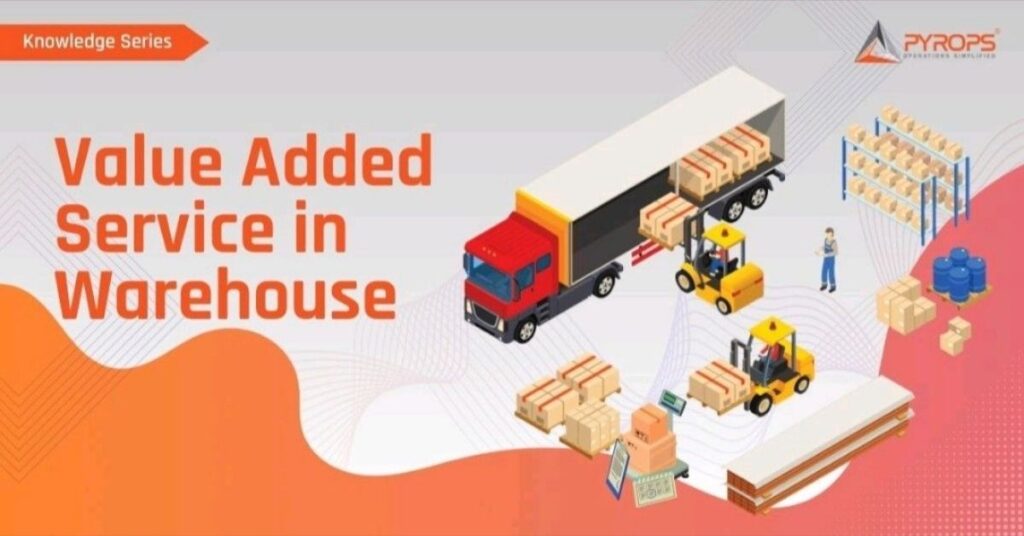
Value-added services (VAS) in logistics play a crucial role in enhancing customer satisfaction for businesses. They have become an indispensable tool for providing comprehensive benefits. In supply chain management (SCM), warehouse value-added services hold significant importance. These services offer numerous advantages to businesses, such as enhancing efficiency and quality, addressing storage needs, and freeing up time for business expansion. A value-added service (VAS service) extends beyond the typical warehousing scope, encompassing additional services that a warehouse or third-party logistics (3PL) provider can offer to clients, surpassing the standard storage and shipping services. Value addition includes kitting, bundling, re-branding, customization, re-packaging, and work order processing (where components are put together to create a new item). These services are customizable to the client’s needs whether shipping retail goods, perishable cargo or high-tech devices to streamline logistics & reduce costs. Why do you need them? How do VAS help businesses’ supply chains & logistics? Forward-thinking companies leverage their supply chain to gain a competitive edge and market share. Entrepreneurs now widely adopt supply chain excellence as a vital business strategy. To stay ahead and outperform competitors, businesses must revamp traditional supply chains. This presents an opportunity for specialists to propose VAS solutions, driving accelerated supply chain innovation. Increased price wars and competition Outsourcing Complex & shortened Product lifecycles Types of VAS Cross Docking Transloading Palletizing Kitting Returns processing Labelling Repacking Postponement services Sorting & Inspection Benefits of VAS Flexibility Quality Ease of integration Closing Thoughts

Knowledge Series

Warehouse Reality vs PowerPoint: Why Processes Break on the Floor

What looks efficient in process charts often plays out very differently on the warehouse floor. Behind every delayed dispatch, stock mismatch, or last-minute coordination call, there is usually a gap between how operations are designed and how they actually run. Understanding that gap is key to understanding why warehouses struggle with control—and what it really takes to fix it. What is ASN? An Advanced Shipment Notice (ASN) is an electronic document (or digital message) sent by a supplier or shipper to the receiving warehouse or customer before the actual shipment arrives. In this blog, we will talk about ASNs when specific to warehouse deliveries.  It provides advanced details such as: Think of it as a digital heads-up — the supplier saying: “Here’s what’s on its way to you, and here’s how it’s packed.” Purpose of ASN The goal of ASN is simple but powerful:To prepare the warehouse for receiving — before the truck even arrives. By knowing what is coming, how much, and when, the receiving warehouse can: In essence, the ASN bridges the gap between supplier dispatch and warehouse receipt, enabling a smoother, paperless inbound process. How ASN is used in Practice In a practical warehouse setup, ASN plays out like this: The Real-World Benefits Companies that adopt ASN report tangible improvements such as: In high-volume industries like FMCG, retail, automotive, and e-commerce, ASNs are the backbone of inbound synchronization — ensuring every warehouse knows what’s arriving, before it arrives. Challenges in ASN Adoption Despite its advantages, many warehouses — especially small and mid-sized ones — still operate without ASN.Here’s why adoption remains uneven: The Way Forward As supply chains digitize, ASN is becoming non-negotiable — especially in B2B commerce and e-commerce ecosystems where inbound visibility drives customer SLAs. Modern WMS platforms now offer: The future lies in making ASN simpler, standardized, and universally adopted, so that even a small regional supplier can digitally collaborate with large 3PLs and distribution networks. Ensure the picking and packing of your warehouses have a smooth flow with Pyrops WMS. Learn More Conclusion The Advanced Shipment Notice may seem like a small digital document — but its impact on warehouse efficiency, cost, and accuracy is enormous. By reducing surprises at the dock, improving inbound coordination, and enabling paperless workflows, ASN turns receiving from a reactive function into a planned, data-driven process. As the supply chain world embraces automation, the humble ASN is finally stepping into the spotlight — becoming a silent yet powerful enabler of smart, synchronized warehousing.

Blogs

Top 10 Things to Do: Peak Season Warehouse Fulfillment

Peak season brings not just more orders, but more pressure—on people, processes, systems, and customer expectations.The difference between chaos and smooth execution? Preparation. Here’s a time-staggered checklist to ensure your warehouse is ready to conquer peak volumes without breaking a sweat: 3 Months Prior: Strategy & System Readiness 1. Forecast Volume Surge by Category & ChannelCollaborate with sales, marketing, and planning teams to anticipate volume spikes, new product launches, and promotions—down to the SKU level. 2. Stress-Test Your WMS and Fulfillment WorkflowsSimulate high-volume scenarios. Practice wave picking, returns handling, and order routing under pressure. Identify workflow bottlenecks early. 2 Months Prior: Space & Staffing Preparation 3. Reorganize Storage Layouts for Fast MoversRelocate high-demand SKUs closer to dispatch zones. Set up temporary pick faces for fast-selling or promotional items. 4. Plan & Train Temporary WorkforceBegin hiring and onboarding temporary staff. Cross-train them for picking, packing, and returns to maintain flexibility. 5. Check Equipment HealthAudit handhelds, printers, scanners, and packing stations. Order spares and fix underperforming devices before they become a problem. 1 Month Prior: Final Optimization 6. Review and Refine Picking StrategiesAdapt to wave, zone, or batch picking as needed. Aim to reduce picker travel time and boost picking efficiency. 7. Set Up Additional Packing & QC ZonesInstall extra packing lines or quality control areas to avoid backlogs. Expand shifts if required by projected volumes. 8. Lock Down Supplier & Courier SLAsConfirm commitments from suppliers and logistics partners. Ensure they’re equipped to handle the increased load. D-Day: Peak Season Kickoff 9. Run Real-Time Dashboards and Exception AlertsMonitor pick rates, dispatch cut-offs, and returns in real time. Set up alerts for SLA breaches or operational slowdowns. 10. Enable Backup ProtocolsHave contingency plans for system outages, courier delays, or inventory mismatches. Make quick, informed decisions to minimize impact. Ongoing Monitoring: Daily Pulse Begin each day with a quick team huddle to review key metrics.Use WMS data to adjust shift planning and workforce allocation.Track returns, damages, and delays to make real-time improvements. Final Thought Peak season is not a test of endurance—it’s a test of preparation, precision, and performance.The best-run warehouses don’t just survive peak—they thrive through it. Want a peak-readiness audit for your warehouse?Let our experts help you benchmark, prepare, and perform. Read More Read SCM News

Blogs

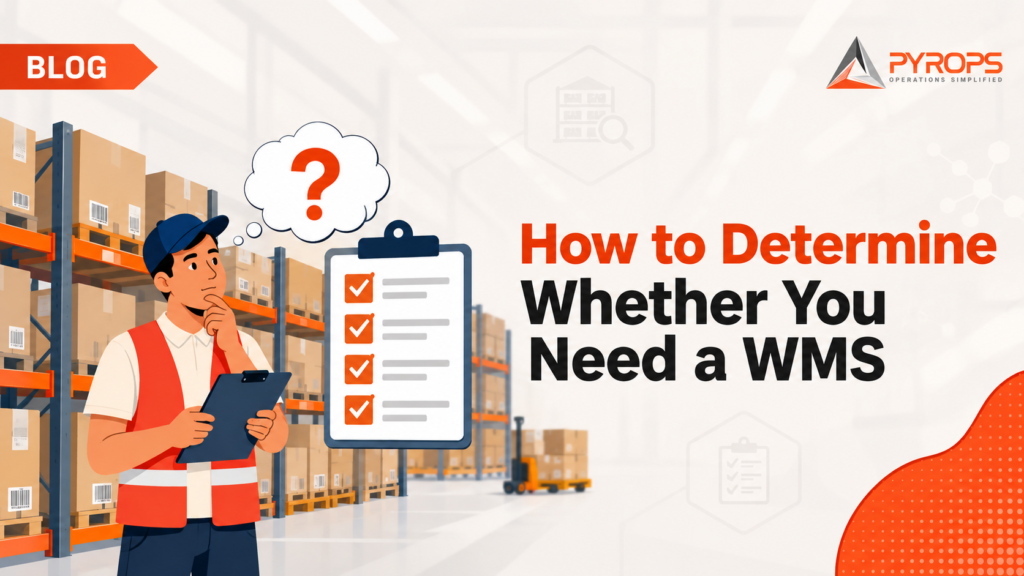
How to Determine Whether You Need a WMS

Warehouse Management Systems (WMS) are no longer reserved just for large enterprises or multinational supply chains. The need for a WMS is driven more by complexity than company size. So how do you know if it’s time to invest in one?Let’s break it down across five key types of complexity that act as clear indicators for when a WMS becomes essential. 1. Size Complexity – Large Warehouses, More Zones, More People If your warehouse is spread across tens of thousands of square feet, has hundreds of storage locations, or multiple floors/racks/zones, it’s likely you’re already losing time in: ExampleA furniture importer managing a 60,000 sq. ft. warehouse often misplaced bulky SKUs. Items were in stock, but teams couldn’t find them quickly. After implementing a WMS, every item had a mapped location, and average pick times dropped by 40%. WMS BenefitBin-level visibility, zone-wise picking, and route optimization. 2. SKU Complexity – High Variety, Expiry, Serial Numbers, and More Managing 500 SKUs is very different from managing 5,000—especially when: ExampleA D2C electronics brand selling routers and soundboxes couldn’t manage warranty and RMA returns efficiently. Serial tracking in their WMS helped trace every device from receipt to dispatch to after-sales service. WMS BenefitTracks each unit uniquely, supports batch, serial, expiry, and decimal inventory with precision. 3. Process Complexity – Tight SLAs, QC, Cross Docking, and Custom Logic If your warehouse has multiple teams and a mix of workflows, you likely struggle with: ExampleA fashion retailer needed FEFO-based picking for perishable stock, kitting for combos, and different QC flows for returns. A WMS automated all these based on rules set per category and customer. WMS BenefitWorkflow automation, rule-based task assignment, real-time alerts, and SLA tracking. 4. Fulfillment Complexity – Multi-Location, Multi-Channel, Multi-Client If you: …you’ve likely faced: ExampleA 3PL company serving 5 brands from 3 cities couldn’t keep inventory segregated and ended up shipping Brand A’s stock to Brand B’s customer. A WMS gave client-level stock visibility and order routing based on location and priority. WMS BenefitChannel-agnostic inventory view, rules for allocation/reservation, and accurate location-level tracking. 5. Volume & Velocity Complexity – High Order Volume, Frequent Stock Movement If your team spends most of their time: …then you’re dealing with high-velocity pain points that only automation can solve. ExampleAn FMCG distributor with 4,000 daily dispatches had a return rate of over 12% due to wrong picks and substitutions. After deploying WMS with barcode-based picking, error rates dropped to 1.4%. WMS BenefitScan-based accuracy, picker-wise performance tracking, load planning, and shift-wise analytics. Bonus Complexity: Lack of Visibility You don’t need to have every complexity listed above. Sometimes, the biggest clue is: If these sentences sound familiar, your warehouse is already operating in the dark. A WMS brings visibility, audit trails, and accountability—day 1 onward. So… Do You Need a WMS? If you nodded “yes” to any of these scenarios, it’s time to stop managing your warehouse like it’s 2010.A modern WMS isn’t just about inventory. It’s about: And as your business scales, it becomes your foundation for future growth. Want Help Evaluating Whether You’re WMS-Ready? Let’s run a free complexity assessment tailored to your operations.\ Read More Read SCM News

Blogs

Andon Cord: Its Relevance in Warehousing and Modern Logistics

The Andon cord is a critical component of lean manufacturing, originally developed as part of the Toyota Production System (TPS). It empowers workers to signal issues on the production line, stopping operations to address defects immediately. While traditionally used in manufacturing, this system is gaining traction in warehousing and logistics, improving efficiency, reducing errors, and enhancing safety. Understanding the Andon Cord System The Andon cord is a simple yet powerful concept that allows employees to signal when they encounter a problem. In manufacturing, this often takes the form of a physical cord that workers pull to stop production. In warehousing, an Andon system can be implemented digitally through automated alerts, signaling issues in real-time to supervisors and warehouse managers. Relevance of Andon Cord in Warehousing 1. Error Prevention and Quality Control One of the biggest challenges in warehousing is maintaining accuracy in order fulfillment. An Andon system allows warehouse staff to report mispicks, inventory mismatches, or damaged goods instantly, preventing the shipment of incorrect products and reducing returns. 2. Operational Efficiency and Downtime Reduction A warehouse operates like a well-oiled machine, where even minor disruptions can lead to significant delays. Implementing an Andon cord system enables quick identification of bottlenecks, mechanical failures, or IT system issues, ensuring swift corrective actions to minimize downtime. 3. Workplace Safety and Hazard Mitigation Warehouses involve various risks, from equipment malfunctions to unsafe working conditions. The Andon system allows workers to immediately report safety hazards, such as spills, equipment failures, or overloaded racks, leading to a faster response and a safer work environment. 4. Real-time Communication and Decision-Making In large-scale warehousing operations, real-time communication is crucial. An Andon system integrates with warehouse management systems (WMS) and IoT-enabled devices, enabling real-time tracking of inefficiencies and empowering management to make data-driven decisions instantly. 5. Employee Empowerment and Engagement By providing warehouse workers with the ability to halt operations when an issue arises, the Andon system fosters a culture of accountability and engagement. Employees feel more involved in maintaining high standards of efficiency and quality, leading to higher job satisfaction and reduced employee turnover. Implementing the Andon Cord System in Warehousing 1. Digital Andon Alerts Instead of a physical cord, many modern warehouses use digital Andon alerts. These can be integrated into warehouse management software, allowing workers to trigger alarms via handheld scanners, tablets, or smart buttons. 2. Color-Coded Alert Systems Warehouses can implement color-coded Andon signals, similar to the traditional red, yellow, and green system: 3. IoT and AI-driven Andon Systems The adoption of IoT and AI enhances Andon’s functionality. Smart sensors can detect operational inefficiencies, such as delayed order picking or incorrect stacking, and trigger Andon alerts without human intervention. 4. Training and Cultural Integration To make the Andon cord system effective, employees must be trained on its importance and usage. Warehouse managers should encourage workers to use it proactively without fear of repercussions, reinforcing a culture of continuous improvement. Conclusion The Andon cord system is no longer limited to manufacturing; its principles are now transforming warehouse operations. By implementing Andon in warehousing, businesses can achieve higher accuracy, improved safety, and enhanced productivity. With advancements in digital technology and IoT, Andon systems are evolving to become an integral part of smart warehousing, ensuring seamless operations and greater customer satisfaction. Read More

Blogs

Ideal Warehouse Inbound Process

1. Pre-Arrival Preparation Documentation Check: Ensure that all necessary shipping and customs documents are prepared and verified. Communication: Communicate with suppliers to confirm shipment details, delivery schedules, and any special instructions. 2. Goods Receipt Documentation check: Thorough verification of the documents accompanying the shipment (invoices) with the demand document (Purchase Orders etc) Physical Inspection: Conduct a thorough inspection of received goods for damages, discrepancies, or deviations from the order. Quality Check: Verify the quality of products against predefined standards. Labeling and Tagging: Ensure proper labeling and tagging of received items for easy identification. 3. Documentation and Data Entry Data Accuracy: Enter shipment data into the Warehouse Management System (WMS) accurately, including item details, quantities, and storage locations. Document Archiving: Safely store all shipping and receiving documents for future reference or auditing purposes. 4. Quality Control (if applicable) Sampling: Perform random sampling of goods to ensure compliance with quality standards. QC Checks: Conduct quality control checks for items with specific quality requirements. 5. Storage Allocation: Storage Planning: Determine the optimal storage location based on factors like item characteristics, demand patterns, and storage capacity. Temperature and Environment Considerations: Consider special storage requirements for items sensitive to temperature, humidity, or other environmental factors. 6. Inventory Updating Real-time Inventory Update: Update the WMS in real-time to reflect accurate inventory levels. Stock Location Labeling: Ensure that physical locations in the warehouse are labeled and accurately reflected in the system. 7. Cross-Docking (If Applicable) Efficient Transfer: Facilitate the direct transfer of goods from inbound to outbound without storage. Real-Time Visibility: Maintain real-time visibility to optimize cross-docking operations. 8. Error Identification and Rectification Regular Audits: Conduct regular audits to identify discrepancies between physical inventory and system records. Error Resolution: Quickly rectify any errors or discrepancies to prevent downstream issues in the supply chain. 9. Vendor Communication Feedback: Provide feedback to vendors regarding any issues or discrepancies discovered during the inbound process. Continuous Improvement: Collaborate with vendors to implement improvements and prevent recurring errors. 10. Compliance Checks (if applicable) Customs Compliance: Ensure compliance with customs regulations, tariff classifications, and other import/export requirements. Legal Compliance: Verify adherence to all local and national regulatory requirements. 11. Inbound Performance Metrics Key Performance Indicators (KPIs): Regularly monitor and analyze KPIs such as receiving accuracy, quality cycle times, and order completeness to identify areas for improvement. Summary Implementing and continually refining this comprehensive inbound process for warehouse operations ensures the smooth flow of goods, minimizes errors, and enhances overall operational efficiency. Regular training, technology integration, and collaboration with supply chain partners are essential components for success in this dynamic environment. Read more: How is dark store fulfillment different from regular E-commerce fulfillment

Blogs

What is HOTO?

Navigating Inventory Hand Over Take Over (HOTO) in WMS Implementation The introduction of a new Warehouse Management System (WMS) marks a pivotal moment for operations. The term Hand Over Take Over (HOTO) gains prominence in this context, signifying the seamless transfer of control and responsibilities from the existing inventory management system to the innovative WMS. This article delves into the nuances of Inventory HOTO during the implementation of a new WMS, encompassing definitions, challenges, pitfalls, and best practices.Hand Over Take Over Definition: Inventory Hand Over Take Over, specific to WMS implementation, involves the transition of control and responsibilities in managing inventory from the existing system to the new Warehouse Management System. This process is indispensable to ensure a smooth integration of the WMS into daily warehouse operations. Key Challenges Accurate opening stock:Migrating from manual warehousing to WMS-based warehousing requires careful planning. Securing accurate location-wise SKU-wise stock with clear details is key to setting up the right base for the transition. Data Migration Complexity:Transferring existing inventory data to the new WMS can be intricate, with potential challenges related to data accuracy and completeness. Employee Training Gap:Inadequate training for warehouse staff on the functionalities of the new WMS can lead to errors and disruptions in inventory management. Integration Issues:Ensuring seamless integration between the new WMS and other existing systems poses a challenge and requires meticulous planning. Pitfalls to Avoid Incomplete Data Transfer:Failing to migrate all relevant data accurately may lead to discrepancies in inventory records. Neglecting User Feedback:Overlooking feedback from warehouse staff during the HOTO process can result in overlooking critical operational nuances. Ignoring System Compatibility:Neglecting to assess the compatibility of the new WMS with existing hardware and infrastructure can lead to integration bottlenecks. Best Practices Early Planning and Assessment:Commence HOTO planning early in the WMS implementation process, conducting a comprehensive assessment of existing inventory systems. Transparent Communication:Foster open communication between teams involved in the HOTO, emphasizing the significance of collaboration and knowledge transfer. Thorough Employee Training:Ensure that warehouse staff receives comprehensive training on the functionalities and usage of the new WMS to mitigate operational disruptions. Detailed Documentation:Develop exhaustive documentation outlining the inventory HOTO process, including step-by-step guides and troubleshooting procedures. Incorporate User Feedback:Encourage and incorporate feedback from warehouse staff during the HOTO process to address any unforeseen challenges. Parallel Run and Testing:Conduct parallel runs and rigorous testing to identify and rectify any issues before full implementation, ensuring a smoother transition. Summary Inventory HOTO, particularly in the realm of WMS implementation, is a critical phase in the evolution of warehouse operations. By recognizing challenges, avoiding common pitfalls, and adhering to best practices, warehouses can orchestrate a successful transition, ensuring that the adoption of a new WMS becomes a catalyst for improved inventory management and operational excellence. The HOTO process, in this context, emerges as not just a transfer of control but as a strategic maneuver that propels warehouses into a more streamlined and technologically advanced future. Read more: How is dark store fulfillment different from regular E-commerce fulfillment

Warehouse
Blogs

Unlocking the Secrets of Warehousing Solutions Through Your Kitchen

In today’s fast-paced world, businesses heavily depend on warehouse management software and inventory systems to efficiently store and organize products. Warehouses play a crucial role in supply chain management, ensuring safe storage and timely distribution. Ever considered applying these warehousing principles in your kitchen?  Surprisingly, many warehousing and inventory management concepts are mirrored in the heart of your home—the kitchen. As we delve into this unexpected comparison, you’ll be amazed at how similar the two worlds are: Role of Warehouse Management Software in Modern Businesses Warehouses play a crucial role in the supply chain, serving as intermediaries between manufacturers and consumers. Their primary function is to store products until they are required for distribution. In a business setting, warehousing management, facilitated by warehouse management system software, ensures products are on hand in the correct quantities, at the right time, and in optimal condition. Efficient storage and inventory management are essential for meeting customer demands and cutting down on supply chain costs. Applying Warehousing Management Techniques To Kitchen Transform your kitchen with strategic warehousing techniques! Learn how to optimize space, enhance organization, and streamline workflows using principles of  efficient warehouse management systems. 1. Location Management and Zoning In your kitchen, every item has a designated spot, just like products in a wms system have specific storage locations based on their category. Think of your pantry shelves as zones where similar items are stored. 2. Quality Check When you receive a delivery of fruits and vegetables, you instinctively perform a quality check. Just as in warehousing solutions, where products undergo inspection upon arrival to ensure they meet specified standards. 3. Goods Receiving and Discrepancy You compare the grocery delivery with the bill, identifying any discrepancies such as shortages or price mismatches. Warehouses similarly reconcile received goods with orders, addressing discrepancies promptly. 4. Directed Putaway Much like directing incoming materials to their designated storage locations in a warehouse, you place groceries in their respective spots to optimize accessibility. 5. Replenishment, Reorder Level Management, Safety Stock Balancing your kitchen stock is similar to managing these inventory aspects. You replenish items strategically to avoid running out, ensuring a steady supply. 6. Economic Order Quantity (EOQ) Ordering groceries involves calculating quantities to prevent either shortages or overstocking—just as in warehousing where EOQ helps optimize inventory levels. 7. Active Pick Area and Bulk Storage Your kitchen’s smaller containers for everyday use are equivalent to an active pick area in warehousing, while larger containers for bulk storage resemble bulk storage solutions. 8. FIFO (First In, First Out) and FEFO (First Expiry, First Out) Maintaining the freshness of your ingredients mirrors these warehousing practices. You consume products based on their expiry dates, prioritizing items with earlier expiration. 9. SLA-Based Order Processing When preparing a meal or packing a lunch, you work backward from when it needs to be ready—much like SLA-driven order processing in warehousing. 10. Liquidation and Scrap Periodically, you clear out products that are no longer fit for consumption, deciding whether to dispose of them or sell them. This aligns with how warehouses handle unsellable goods. 11. Kitting and Value-Added Services Preparing a complex dish involves “kitting” ingredients, akin to assembling a bill of materials in warehousing. Value-added services in both realms enhance the final product. 12. Continuous Improvement Just as you find ways to streamline your cooking processes for efficiency, continuous improvement principles drive enhancements in warehouse operations. Conclusion This kitchen-to-warehouse analogy reveals that the principles of efficient management are universal. So next time you’re cooking up a storm, remember that you’re not just a chef but also a master of logistics in your own home! Read more: How is dark store fulfillment different from regular E-commerce fulfillment

Blogs

Pickers who walk vs Walkers who pick! What do you have in your warehouse?

In today’s fast-paced business environment, warehouse efficiency is crucial for maintaining a competitive edge. One of the biggest challenges faced by warehouse managers is managing labor costs, which can account for a significant portion of overall warehouse expenses. Within labor costs, picking labor is the most significant contributor, making it a prime target for optimization. Warehouse pick packers are responsible for both picking and packing orders, and they can also spend a lot of time walking between the two areas. If your warehouse picking workforce is spending a significant amount of time walking up and down the aisles, it’s time to look for opportunities to optimize travel costs. Here are some ways to optimize travel costs involved in warehouse picking operations: Warehouse labor costs are dominated by picking, which accounts for an estimated 70% of warehouse activities. Warehouse pickers & packers spend nearly half of their time looking for items and the other half walking around the warehouse. Reducing travel time can save warehouses up to 5% of their operating costs. Improving your storage practices (reduce the need to walk) Zoning: Organize your inventory into fast/medium/slow moving zones. By placing the fast-moving zones closer and with easier accessibility, warehouse pickers can reduce the effort required for picking, resulting in faster and more efficient operations. Slotting: Periodic slotting in warehouses helps reorganize inventory placements in a way that aligns with demand patterns and forecasts, ultimately reducing pick times. This practice can help warehouse managers maximize space utilization and improve order fulfillment. Route Optimization: A good warehouse management system can significantly improve pick path efficiency. Such systems can help optimize the sequence of picking tasks, taking into account variables like proximity, demand, and inventory movement. By reducing travel times and streamlining workflows, warehouse managers can save time, improve order accuracy, and increase productivity. Split picking tasks from material handling tasks An effective method to optimize warehouse operations is to separate the responsibilities of warehouse pickers from those of material handlers. Warehouse pickers require higher-order skills, while material movement from one location to another can often be handled by personnel available at a lower cost. By enabling warehouse pickers to remain within their designated zones and digitally assigning tasks to them, we can minimize unnecessary travel and physical strain. Necessary infrastructure for the picking process, such as empty bins, pallets, and boxes, can be provided to the warehouse picker within their designated zone, eliminating the need to venture outside their assigned area. Once the warehouse picking task is completed, material handlers can take over the task of transferring goods from the pick zone to the operational area. This approach reduces travel time, enhances overall productivity, and also lowers the risk of errors in warehouse operations. An effective way to optimize warehouse operations is to split picking tasks from material handling tasks. While picking requires higher-order skills, material movement from one location to another can often be performed by personnel who are available at a lower cost. By allowing pickers to stay in their respective zones and directing tasks to them digitally, the need for unnecessary travel and physical exertion is minimized. Infrastructure required to perform the picking tasks, such as empty bins, pallets, and boxes, can be made available to the picker in their zone without having to move outside the zone. After the picking task is complete, material handlers can perform the movement of goods from the pick zone to the operating area. This strategy reduces travel time and improves overall productivity while also reducing the risk of errors. Automation Warehouse automation stands as a pivotal means to reduce labor costs and enhance the efficiency of automated warehouse systems. Within this range, there exists a spectrum of technologies, including conveyors, automated robots, and other advanced solutions, collectively contributing to improved automated warehousing. Nevertheless, when it comes to opting for the ideal warehouse automation solution for your needs, a correct examination of multiple factors is in order. These factors encompass the complexity of your automated warehouse systems, financial considerations, and your company’s prospective plans. Warehouse automation companies should focus their attention on the unique nature of their automated warehousing operations and the specific requirements of their inventory when contemplating an automation solution. Additionally, they should weigh the financial investment required and the lasting impact it will have on their operations. By conducting a comprehensive assessment, warehouse automation companies can single out the warehouse automation solution that best aligns with their distinctive demands, ultimately resulting in an augmentation of their automated warehouse performance. Benefits of Optimizing Warehousing Travel By optimizing travel by 25%, you have the potential to achieve substantial cost savings in your warehousing operations. This can be calculated as 25% of the cost of picking labor, which accounts for 50% of total warehousing labor costs, and 40% of overall warehousing costs. This equates to a potential 5% reduction in your overall warehousing costs, which is significant. Additionally, reducing travel time for warehouse pickers pickers can have a range of benefits, including reducing fatigue, minimizing errors, and boosting employee morale. To realize these benefits, the first step is to engage with a supply chain solution provider. They can analyze your current situation and provide recommendations for optimizing your operations. By deploying the necessary technology, you can achieve the cost savings and efficiency gains that come from reducing travel time for your warehouse pickers & packers. Conclusion To improve travel cost efficiency in warehouse picking and packing operations, warehouse managers can implement strategies such as zoning, slotting, route optimization, and material handling automation. These strategies can help reduce labor expenses and improve productivity for warehouse pickers and packers. Reducing travel time for warehouse pickers also has other benefits, such as reduced fatigue, fewer errors, and improved morale. Warehouse managers can work with a supply chain solution provider to assess their operations and get personalized recommendations for improving travel cost efficiency. In summary, optimizing travel costs in warehouse picking and packing is essential for maintaining a competitive edge in today’s fast-paced business environment.

Pyrops® WMS is a warehouse management software designed, developed, and implemented by Precision Pyramid Private Limited.

For more info visit: www.precisionpyramid.com

India Head Office

A-1, Forest Lane, Near Ghitorni Metro Station, MG Road, Sultanpur, New Delhi – 110030

Nepal Corporate Office

Precision Pyramid Nepal Private Limited 6th Floor, Radha Bhawan, Tripureshwar, Kathmandu, Nepal

Contacts

Follow us

Scroll to Top