
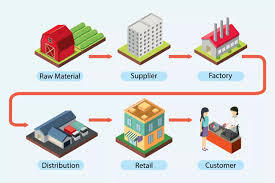
For years, spreadsheets were the backbone of supply chain decision-making. From demand planning and inventory tracking to logistics cost calculations, Excel sheets served as the primary tool for managers trying to make sense of complex operations. While spreadsheets offered flexibility and familiarity, they were fundamentally limited in an era where supply chains are increasingly global, volatile, and data-intensive. Today, supply chain decision-making is undergoing a major transformation, shifting from manual, reactive approaches to intelligent, technology-driven systems.
The Spreadsheet Era: Useful but Fragile
Spreadsheets played a crucial role in the early stages of supply chain digitization. They allowed teams to organize data, run basic scenarios, and generate reports without heavy IT investment. However, as supply chains expanded in scale and complexity, cracks began to show.
Version control issues, data silos, manual errors, and limited real-time visibility became common challenges. Decisions were often based on historical data rather than current conditions. Scenario planning was time-consuming, and collaboration across departments was difficult. Most importantly, spreadsheets could not cope with uncertainty, whether caused by demand fluctuations, supplier disruptions, or transportation delays.
As global events, e-commerce growth, and shorter customer delivery expectations increased pressure on supply chains, the need for more robust decision-making tools became evident.
The Rise of Integrated Supply Chain Systems
The first major shift away from spreadsheets came with the adoption of Enterprise Resource Planning (ERP) systems and dedicated supply chain software. These systems integrated data across procurement, manufacturing, warehousing, and distribution, creating a single source of truth.
Instead of manually updating sheets, teams could access standardized dashboards and reports. Planning cycles became faster, and cross-functional coordination improved. However, while these systems improved efficiency and visibility, many decisions were still rule-based and heavily dependent on human judgment.
As volatility increased, it became clear that integration alone was not enough. Supply chains needed systems that could sense change, analyze impact, and recommend actions at speed and scale.
Smart Systems and Data-Driven Intelligence
This gap led to the emergence of smart supply chain systems powered by advanced analytics, artificial intelligence (AI), and machine learning (ML). These systems go beyond reporting what has happened; they help predict what is likely to happen and suggest what should be done next.
Modern decision-support platforms can analyze vast volumes of structured and unstructured data from demand signals and supplier performance to weather patterns and geopolitical risks. They enable real-time visibility, predictive forecasting, and scenario modeling. Instead of reacting to disruptions, organizations can proactively plan for them.
For example, AI-driven demand planning systems continuously learn from market behavior, improving forecast accuracy over time. Smart inventory optimization tools balance service levels and working capital dynamically. Control towers provide end-to-end visibility and alert decision-makers to potential risks before they escalate.
From Human-Driven to Human-Augmented Decisions
Importantly, smart systems are not replacing human decision-makers; they are augmenting them. The role of supply chain professionals is evolving from data compilation to strategic oversight. With systems handling data processing and scenario analysis, leaders can focus on judgment, collaboration, and long-term planning.
Decision-making is becoming faster, more consistent, and more resilient. What once took weeks of manual analysis can now be done in minutes, with multiple scenarios evaluated simultaneously. This shift is particularly critical in industries facing frequent disruptions and demand uncertainty.
The Road Ahead
The evolution from spreadsheets to smart systems marks a fundamental change in how supply chains operate. As technologies such as digital twins, generative AI, and autonomous planning continue to mature, decision-making will become even more predictive and adaptive.
However, success depends not just on technology adoption, but on change management, data quality, and organizational readiness. Companies that combine smart systems with skilled teams and clear governance will be best positioned to build resilient, future-ready supply chains.
In a world where uncertainty is the new normal, intelligent decision-making is no longer optional it is a competitive necessity.